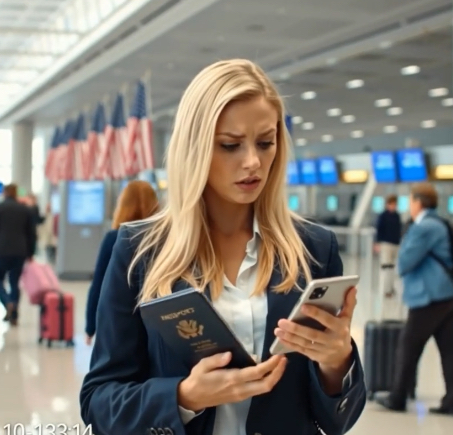
I stood at the threshold of my parents’ home, the paper clutched in my trembling hands like a lifeline. The air between us was thick with unspoken tension, a fragile silence threatening to shatter at the slightest provocation. I could feel the weight of years pressing down on me, the years I had spent conforming, appeasing, and remaining silent.
They had opened the door with the kind of casual warmth reserved for minor misunderstandings, not realizing that this time was different. I had come armed with questions that demanded answers, questions that would not be easily deflected or dismissed with a paternal pat on the back or a maternal sigh of exasperation.
“Why wasn’t my name on that ticket?” I asked, holding the folded paper up like an incriminating photograph in a courtroom drama. The words barely escaped my lips before I felt their impact, like stones skipping across a once-calm lake.
Their smiles faltered, replaced by expressions I’d never seen before—an unsettling mix of surprise and something else, something akin to fear. It was in that moment I realized how little I truly knew about them, about the depth of their secrets, and the extent they would go to protect them.
“Sweetheart, you’re overreacting,” Mom started, her voice a feeble attempt at soothing the frayed edges of the situation. “It’s just a mix-up. These things happen.”
Dad, ever the practical one, chimed in. “Let it go. It’s not like it’s the end of the world. These things have a way of working themselves out.”
But I wasn’t there to be placated or reassured. I was there for the truth. “Just tell me,” I insisted, my voice steady despite the storm brewing inside. “Tell me why my ticket was canceled, and why I found transactions in my name I never made.”
A flicker of recognition passed between them, a silent conversation that spoke volumes. Mom’s eyes darted to Dad’s, seeking guidance, but what she found there was as unsettling as my questions. The panic was palpable now, a tangible presence that filled the space between us.
“Your sister needed help,” Dad finally admitted, the words escaping like a reluctant prisoner. “We didn’t think you’d mind covering for her just this once.”
Just this once. The phrase echoed in my mind, its meaning as transparent as their intentions. It wasn’t about the money; it was about the pattern, the expectation that my life could be rearranged at their convenience, that my needs were always secondary.
And there it was—the reason for their panic, the lock clicking shut on a room I wasn’t supposed to enter. It was the realization that I was no longer a passive participant in their narrative. I had taken control, and with it, I had shattered the illusion they had so carefully constructed.
I left their house that day with more than just answers. I left with a newfound understanding of my own worth, and the knowledge that the story of my life was mine to write. The canceled ticket was just the beginning, not of an ending, but of a new chapter where I was no longer the easy one, but the one who had finally found her voice.