“Mom, if you want to keep living here, pay the rent like any other tenant or leave.”
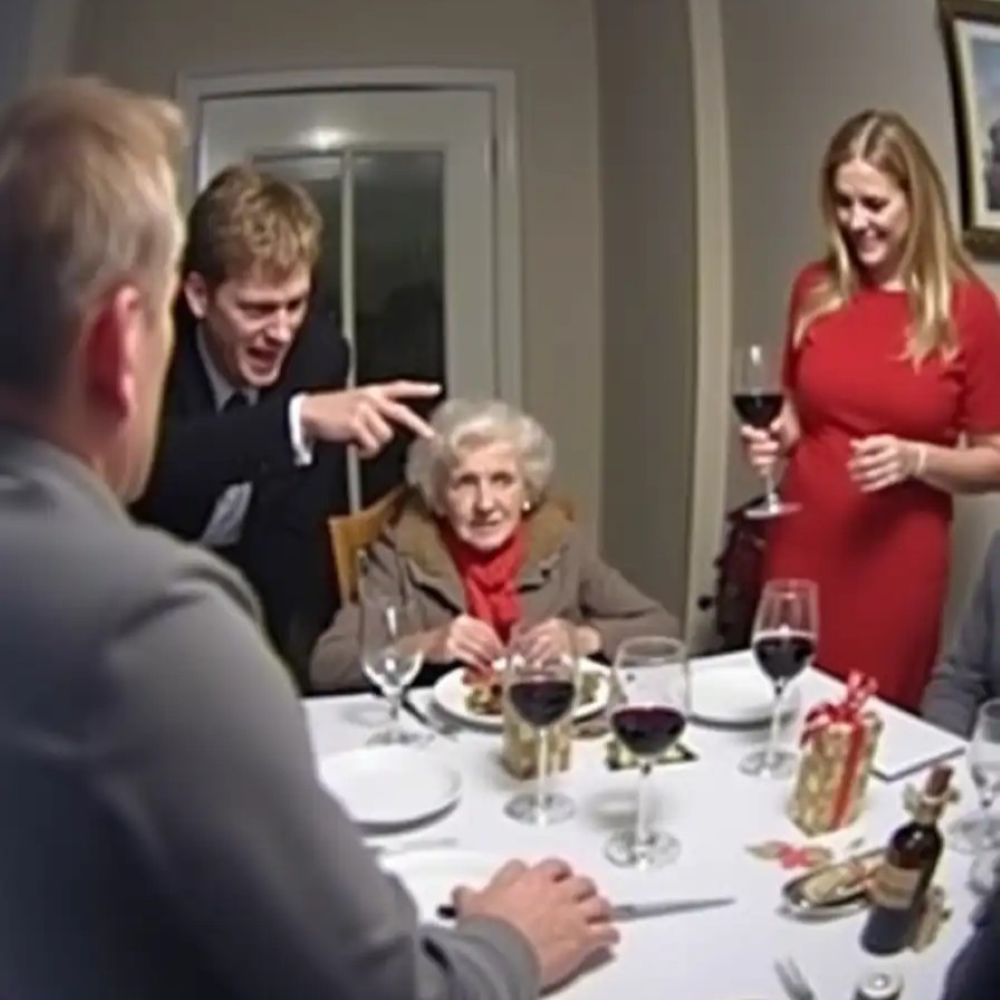
My son’s voice, usually a source of warmth in my life, cut through the ambient chatter of Christmas dinner like a serrated knife. Twenty-five pairs of eyes—cousins, uncles, business associates—snapped toward me. The silence that followed was heavy, suffocating, drowning out the festive clink of crystal glasses and the low hum of jazz playing in the background.
What Matthew didn’t know was that this 2,000-square-foot penthouse on the Upper East Side, the one he boasted about to every colleague who would listen, was mine. The gray Cadillac he parked every night in the garage? Mine. The platinum credit card his wife, Audrey, used to buy Louis Vuitton bags on Fifth Avenue? Also mine.
Everything. Absolutely everything was mine.
I am Katherine Vega. I am sixty-four years old, and this is the story of how my silence nearly destroyed my only son, and how breaking it was the hardest thing I have ever done.
The aroma of roasted turkey still filled every corner of the penthouse, a scent that usually brought comfort but now turned my stomach. I had been up since 6:00 A.M., preparing the apple pie, the homemade pecan bars, and the candied yams that Matthew had loved since he was a boy. I moved from the kitchen to the dining room, my apron stained with gravy, my hands—wrinkled by years of unseen labor—trembling slightly as I held the heavy serving platter.
“Lucy, sit down for a moment,” my cousin Sarah whispered with that condescending smile I knew so well, mistaking my name in her fluster. “You’ve done enough. It’s fine.”
“I’m okay,” I replied, forcing a smile that felt like cracked plaster.
From my position next to the open-plan kitchen counter, I could see the whole dining room. Matthew sat at the head of the table in his white linen shirt and that Rolex watch Audrey had given him last year—using my money, of course. He was talking to his cousin Alex about his latest project, an office building on Park Avenue.
“This month has been absolutely insane,” Matthew was saying, gesticulating grandly with his wine glass. “The client is pushing hard on the deadlines. But hey, the salary for a senior architect in New York isn’t bad at all. It’s enough to keep this place, the car, and everything else.”
Audrey, sitting next to him, smiled with satisfaction. She wore a red silk dress that probably cost more than a nurse’s monthly salary. Her perfectly manicured nails sparkled under the chandelier as she stroked Matthew’s arm.
“And even so,” Audrey added, slightly raising her voice so everyone could hear, “the bills never stop coming. This house, the decorations, maintaining the lifestyle… nothing is free in New York City.”
Several heads nodded in agreement. My uncle George cleared his throat. “They are right. Rents in this area are impossible. $2,500 to $3,000 a month for a decent apartment.”
“Exactly.” Matthew straightened up, expanding his chest. “That’s why I always say you have to work hard. No one gives you anything for free in this city.”
I felt a knot in my stomach tighten, twisting like wet rope. No one looked at me. No one noticed how my hands gripped the serving spoon harder than necessary, knuckles turning white. The conversation continued to revolve around money, the cost of living, and how hard it was to make ends meet—all spoken by people drinking their third bottle of $40 Zinfandel.
Then it happened. Matthew wiped his mouth with his napkin, took a practiced sip of wine, and looked directly at me. There was something in his eyes that I recognized immediately—the same cold determination his father, Anthony, had when he made tough business decisions. But this time, that look was aimed at his mother.
“Mom,” he said with a tone that silenced the room. “Since we are talking about the subject of the house…”
The dining room fell silent.
“I’ve been thinking,” he continued, placing his glass on the table with a soft but firm thud. “If you want to continue living here with us, you should contribute a portion of the rent. Like any adult who shares a space.”
Time stopped. The air conditioning hummed, deafening in the quiet.
“It’s only fair, right?” he added, looking around the table for approval. “We are all adults. And if that’s difficult for you with your widow’s pension… well, maybe it would be better for you to look for something more in line with your means.”
Audrey nodded, taking a sip of wine. “Nowadays, everyone must be responsible for their own expenses, even if they are family. In fact, precisely because we are family, we should be honest about these things.”
I looked around the table. My cousin Sarah studied her fork. Uncle George coughed into his napkin. Aunt Patty murmured, “Well, it’s true that nowadays… independence is important.”
No one defended me. No one asked, “Are you really kicking your mother out on Christmas?”
The tick-tock of the wall clock sounded like a countdown. I felt as if twenty-eight years of sacrifice, of sleepless nights building an empire so my son could have a future, evaporated into thin air.
Carefully, I placed the serving spoon on the counter. I folded my napkin with precise, deliberate movements and placed it next to my untouched plate. I stood up, feeling my knees creak—a sound only I could hear.
“Thank you all for coming,” I said, my voice so calm it frightened me. “This Christmas dinner will probably be the last one I spend in this house.”
Matthew blinked, confused. “Mom, you don’t have to be so dramatic. We are just talking about being realistic with—”
“You’re right, Matthew,” I interrupted him, looking him directly in the eyes. “It’s time to be realistic.”
I turned and walked toward the hallway that led to my bedroom. Behind me, the uncomfortable murmurs resumed. I closed my bedroom door. The soft click of the latch sounded like a gunshot.
I opened the nightstand drawer and took out a Manila folder. Inside were documents that no one in this house knew existed.
Articles of Incorporation for Vega Properties LLC.
Stock Shares: Katherine Vega, 85%. Executive Director: James Torres.
Property Contracts: Penthouse, Upper East Side. Owner: Vega Properties LLC.
Vehicle: Cadillac AE6. Registered to Vega Properties LLC.
I slowly flipped through the pages. Each document was a reminder of what I had built, and what I had allowed my son to steal through my own silence. I took out my cell phone. It was 11:47 P.M.
I dialed a number I had on speed dial.
“James, it’s Catherine.”
“Catherine? Merry Christmas. Is everything okay?”
James Torres had been Anthony’s right-hand man. He was the only one who knew the full truth.
“I need you to prepare all the documents related to Matthew first thing tomorrow morning,” I said, my voice steady. “The lease agreement. The vehicle authorization. The credit card.”
There was a silence on the other end. “Catherine, are you sure?”
“Completely sure,” I replied. “It’s time for my son to learn the true meaning of the word independence.”
I hung up and pulled a suitcase from the closet. Dust billowed up. I packed three blouses, two pairs of pants, and my comfortable shoes. Everything fit in half a suitcase. I dragged it down the hall, the wheels screeching on the hardwood floor, cutting through the party music like a knife.
Matthew got up from the table. “Mom, where are you going? I didn’t mean for you to leave tonight.”
“I understood perfectly,” I said, standing by the door. “You believe this house is yours. That everything you have is thanks to your effort.”
“Because it is!” Audrey chimed in. “Matthew works hard.”
“You’re right,” I said simply. “No one gives anything for free. See you soon.”
I walked out. The heavy door closed with a finality that shook the walls. I descended in the elevator alone, the silence ringing in my ears. Outside, a black Lincoln waited. Not a cab. A Vega Properties car.
“Good evening, Miss Vega,” the driver, Mike, said. “To the Upper West Side apartment?”
“Yes, Mike. And one more thing.” I looked back at the penthouse balcony. “When you come to pick up the gray Cadillac tomorrow, make sure you bring the spare key. He won’t give it up easily.”
Mike nodded. “Understood.”
I settled into the leather seat. The war had begun. And my son had no idea he was bringing a knife to a nuclear fight.
Day 1. December 28th, 9:15 A.M.
Matthew opened his laptop at the penthouse dining table, nursing a coffee and a headache. Audrey was still asleep, exhausted from complaining about my “drama” until 3 A.M. He clicked on his inbox, scrolling past corporate spam until a subject line froze his blood.
Formal Notification: Lease Agreement Termination.
Sender: Vega Properties Administration.
He opened it, blinking rapidly.
Dear Mr. Matthew Vega,
Vega Properties LLC hereby notifies you that the lease agreement expiring on January 31, 2024, will not be renewed. You have until the indicated date to vacate the property.
“What the hell?” he whispered.
He dialed the number at the bottom. A professional female voice answered. “Vega Properties Administration.”
“This is Matthew Vega. I just got an eviction notice. This has to be a mistake. I pay my rent on time!”
“One moment, sir… There is no mistake. The owner has decided not to renew. It is their legal right.”
“Who is the owner? I need to talk to them.”
“That information is confidential. If you wish to re-apply when the unit is listed, the current market price is $3,800 a month.”
Matthew choked on his coffee. “$3,800? But I pay $1,400!”
“You pay a preferential employee rate, sir. That will no longer apply.”
The line went dead. Matthew sat staring at the screen. $3,800 was mathematically impossible on his salary.
“Matthew?” Audrey stood in the bedroom doorway, wrapped in silk. “Why are you yelling?”
“We’re being evicted,” he said, his voice hollow.
“What? No. This is your apartment!”
“It’s rented. It always has been.”
Audrey’s face shifted from confusion to fury. “This is your mother. She did this.”
“I don’t know,” Matthew ran his hands through his hair. “But I’m going to find out. I’m going to the Vega Properties office right now.”
At 12:30 P.M., Matthew parked the Cadillac in a garage that cost $45 an hour and marched into the modernist building on Park Avenue. He demanded to see the director.
The receptionist looked him up and down. “One moment.”
While he waited, Matthew paced the lobby. The walls were lined with black-and-white photos of buildings. He stopped in front of one. It showed a construction site from the late 90s. In the center was a man in a hard hat, smiling.
His father. Anthony Vega.
The plaque underneath read: Anthony Vega, Co-Founder, 1989-2017.
“Co-founder?” Matthew whispered. His father was a construction worker. Or so he had been told.
“Mr. Vega?”
A man in a sharp suit approached. “I am James Torres, Executive Director. Why don’t we go to my office?”
Inside, James was polite but immovable. The lease was terminated. The decision was final.
“My mother,” Matthew said, desperate. “Did she talk to the owner? Is she sabotaging me?”
James looked at him with a strange expression. “Your mother has nothing to do with this business decision. However, I suggest you start looking for a new place immediately.”
As Matthew left, defeated, his eyes caught another photo on the wall near the elevator. It was blurry, taken at a ribbon-cutting ceremony. In the background, behind James Torres, stood a woman in a simple dress, holding a clipboard, directing two men in suits.
The posture. The bun. The jawline.
It was his mother.
Meanwhile, at Columbus Circle, Audrey was standing at the register at Nordstrom, a silk dress in her hand. She swiped the silver credit card.
Declined.
“Try it again,” she snapped at the cashier.
Declined.
She called the bank, furious. “My card isn’t working!”
“One moment… Ah, yes. That is an additional card on the account of Katherine Vega. It was cancelled yesterday by the primary holder.”
“Cancelled?” Audrey screeched.
“Yes, ma’am. Immediately.”
She hung up, her hands shaking with rage. She called Matthew. “Your mother cancelled the card! The one you said was yours!”
“Audrey, stop,” Matthew said, his voice strange. “I’m looking at a photo. A photo of my father.”
“I don’t care about your father! I care that I look like a pauper in Nordstrom!”
“Audrey… I think my mother owns Vega Properties.”
“What?”
“I think she owns everything.”
The silence on the line was deafening.
“Go home,” Audrey whispered. “We need to talk.”
But when Matthew arrived home, two men in reflective vests were waiting by his parking spot.
“Mr. Matthew Vega? We are here to recover the Cadillac AE6. Company property. Authorization revoked.”
“You can’t take my car!”
“Read the contract, sir. Temporary authorization. Sign here, or we call the tow truck.”
Matthew signed. He watched the gray Cadillac—the symbol of his success—drive away, leaving an empty spot on the pavement.
He walked into the apartment. Audrey was sitting on the couch, surrounded by shopping bags she couldn’t pay for.
“She owns it all,” Matthew said, collapsing into a chair. “The house. The car. The money. And we treated her like a servant.”
Audrey looked up, her eyes cold. “Then fix it. Beg her. Do whatever you have to do. Because I am not living in a shoebox.”
Matthew grabbed his keys. “I’m going to find the truth.”
He didn’t go to his mother. He went to the hospital. To room 304.
“Grandma?”
Carol, my mother, looked up from her bed. She looked frail, but her eyes were sharp.
“So,” she said. “You finally found out.”
“Why didn’t you tell me?” Matthew pleaded. “Why let me believe I was supporting her?”
“Because she wanted you to be strong,” Carol said. “She wanted you to build your own character. Instead, you built an ego.”
“What do I do?” he wept.
Carol took his hand. “You start from scratch. Without her money. Without her help. That is the only way you can ever look her in the eye again.”
Matthew left the hospital, his mind reeling. He had lost everything in forty-eight hours. But the real blow was yet to come. Because as he walked out into the cold January night, he realized he didn’t even know where his mother really lived.
And he had nowhere to go.
Six months later. July.
The heat in Queens was oppressive. Matthew wiped sweat from his forehead as he sat on the floor of his 450-square-foot apartment. No air conditioning. Just an oscillating fan that clicked with every rotation.
He had moved here in February. Audrey had left him three days later, heading back to Miami. “Call me when you’re the man I married,” she had written on a Post-it note stuck to the fridge.
He looked at the blueprints spread out on his tiny IKEA table. He was thinner. His hands were calloused from working construction sites during the day for Andrew Villanueva, an old friend of his father’s. By night, he designed.
“Dignified Housing.” That was the project. Modular apartments for low-income families. Sustainable. Cheap. Beautiful.
His phone rang. It was Andrew.
“Are you sitting down?”
“Yes. On the floor.”
“I got you a meeting. An investment group. They focus on social impact. They want to see you on August 15th.”
“Who are they?”
“Discreet. But they have the capital. Matthew, this is your shot. Don’t blow it.”
Matthew spent the next two weeks preparing. He didn’t sleep. He ate instant noodles. He practiced his pitch to his neighbor, Rose, an elderly woman who reminded him painfully of his mother.
On August 15th, he put on his only suit—bought secondhand—and took the subway to the address Andrew had given him.
It was the Vega Properties building.
“There’s a mistake,” Matthew told the receptionist, panic rising.
“No mistake,” she smiled. “Fourth floor. Boardroom.”
The elevator ride felt like an execution. The doors opened to a floor he had never seen. Glass walls. A view of the city.
He opened the heavy oak door.
Sitting at the head of the table was his mother. Katherine Vega.
She looked regal. Powerful. Beside her sat James Torres and Rachel Martinez, the lawyer.
“Matthew,” she said, her voice professional, stripped of maternal warmth. “Please sit down. We have one hour.”
Matthew set up his laptop. The screen was cracked. His hands shook. He looked at his mother, searching for a hint of forgiveness, but found only expectation.
“My name is Matthew Vega,” he began, his voice steadying. “I am an architect. And I am here to present a project that can change the lives of 120 families.”
For forty-five minutes, he spoke. He didn’t speak with arrogance. He spoke with the grit of someone who had learned the cost of every brick. He spoke about dignity. About community.
When he finished, silence filled the room.
“Why this project?” Catherine asked finally. “Why now?”
Matthew looked her in the eye. “Because six months ago, I lost everything. And in that process, I discovered something. Living in an apartment with no elevator, counting every dollar… it taught me more than five years of college. I understood that buildings aren’t for impressing people. They are for living.”
He paused, swallowing the lump in his throat. “My father taught me that the hands that build matter more than the papers that sign. I finally understand what he meant.”
Catherine closed her notebook. “Thank you. We will inform you within 48 hours.”
Matthew left, feeling drained. He walked to the elevator, but before the doors closed, he heard James Torres’s voice from the hallway.
“He’s ready, Catherine.”
Two days later, at 11:00 P.M., his phone rang.
“Hello, Matthew Vega. This is Mount Sinai Hospital. Your mother has been admitted. Cardiac episode.”
Matthew ran. He ran until his lungs burned. He found James in the hallway, looking gray.
“She worked herself into the ground,” James said. “Since you left. She had to be sure.”
“Sure of what?”
“That you had learned.”
Matthew entered the room. His mother looked small in the hospital bed, wires monitoring her heart.
“Mom,” he whispered, grabbing her cold hand.
She opened her eyes. “The project is approved,” she rasped.
“I don’t care about the project! Why did you do this?”
“I had to know,” she said, squeezing his hand weakly. “I forgave you the night you left, Matthew. But I had to wait for you to forgive yourself. To become the man who could build something real.”
“I promise,” he wept. “I’ll do better. I’ll be better.”
“Good,” she smiled, her eyes drifting shut. “Because you start Monday. And Matthew? Don’t just build buildings. Build a life.”
Five years later. 2029.
The Anthony Vega Residential Complex stood tall against the New York skyline. Fifteen buildings. 450 homes. A community built on dignity.
Matthew stood at the podium, the wind ruffling his graying hair. Beside him stood Catherine, now sixty-nine, retired but radiant. In the front row sat Luke Smith, the first kid to move into the complex, now an architecture student on scholarship. Beside him sat Anne, Matthew’s wife—a schoolteacher who loved him for his heart, not his wallet.
“This project,” Matthew said into the microphone, “is named after my father. But it is the legacy of my mother.”
He looked at her, and the crowd applauded.
“Five years ago, I was a man who thought he deserved the world. Today, I am a man who tries every day to earn his place in it.”
That night, on the terrace of Catherine’s modest Upper West Side apartment, they watched the city lights.
“Are you happy, son?” she asked.
“I am at peace,” he replied. “Which is better.”
“And you?” he asked.
“I am watching my masterpiece,” she said, gesturing not to the buildings, but to him. “Everything I built… the money, the properties… that wasn’t the legacy. You are.”
They sat in silence, the noise of the city below them—a chaotic, beautiful symphony of effort and dreams. Matthew took his mother’s hand. It was rough, wrinkled, and strong.
The silence that had once nearly destroyed them was gone. In its place was something far more durable. A truth, forged in fire, that would last longer than any skyscraper.
“Thanks, Mom,” he whispered.
“You’re welcome,” she said. “Now, pay the check for dinner. It’s your turn.”
And for the first time in his life, Matthew laughed, pulled out his own wallet, and paid the bill with money he had earned with his own two hands.