Doña Consuelo was blind, seventy years old, and had lived her entire life believing that motherhood meant endurance without complaint.
The phone slipped slightly in her trembling hand as she listened to her son’s voice on the other end of the line—calm, firm, final.
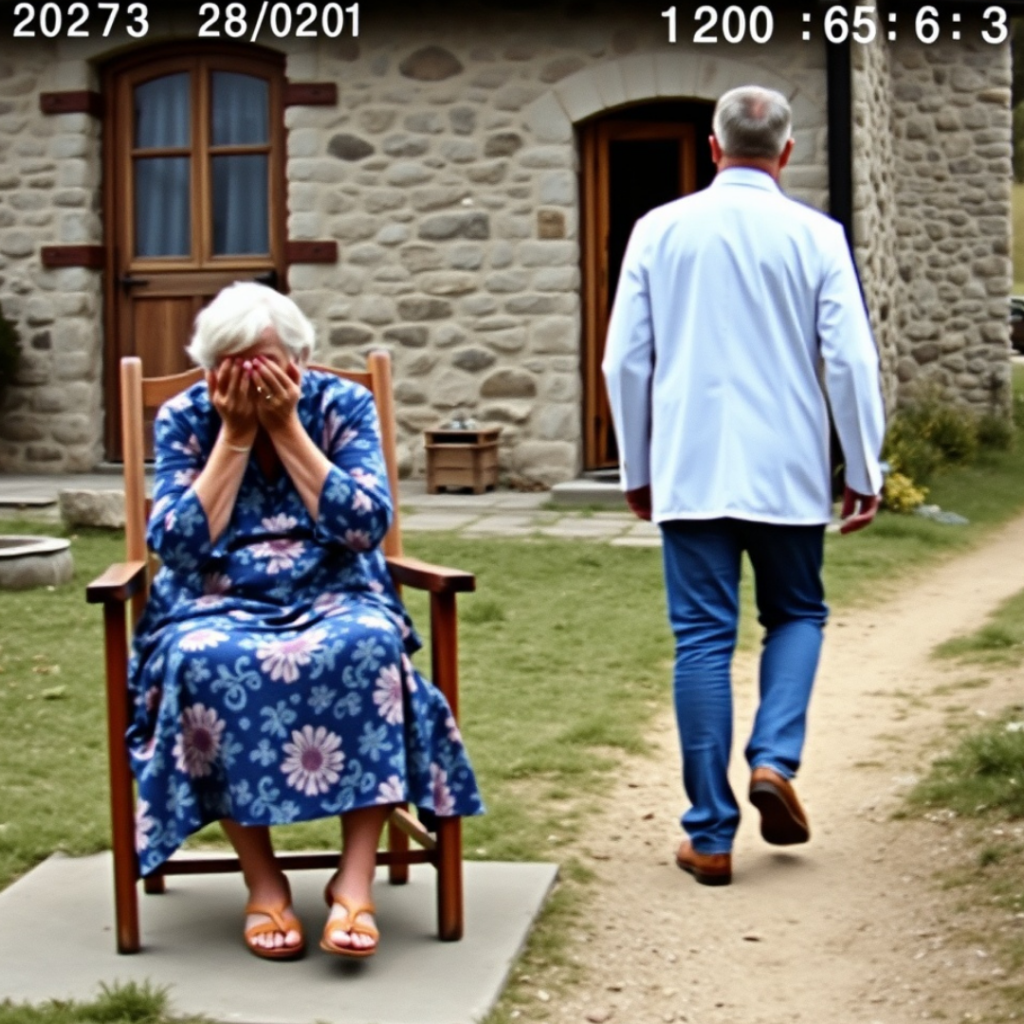
“I already sold the land, Mom,” Mauricio said. “You have three days to leave.”
Her throat tightened.
“What are you saying, my son? That land is our home. I raised you there. I washed clothes there to pay for your school.”
“It’s not yours anymore,” he replied, his tone impatient. “You signed a power of attorney years ago. It’s done.”
“But… this is where I live,” she whispered. “Where am I supposed to go?”
“I don’t know,” Mauricio said. “But it’s not my problem anymore. The new owners arrive Friday.”
The line went dead.
Doña Consuelo dialed again. Once. Twice. Five times.
The number you have dialed does not exist.
She sat in silence, her hands shaking, her eyes dry—not because she felt nothing, but because she had cried everything out long ago.
On Friday morning, a car stopped in front of the house. Two men stepped out with measuring tapes. A woman followed, clipboard in hand.
“Ma’am, you need to vacate the property,” the woman said briskly. “Everything is signed.”
“My son told me I had three days,” Consuelo said softly.
“Today is the third day.”
Doña Consuelo rose slowly from the wooden bench where she had waited decades for laundry to dry.
“I can take what fits in one bag,” she said. “The rest stays.”
The woman didn’t look up. “Hurry. We need to measure before dark.”
A neighbor, Doña Amparo, rushed over.
“Consuelo, what’s happening?”
“They sold it,” Consuelo said. “My son did.”
Amparo wrapped an arm around her.
“Where is Mauricio?”
“I don’t know. He doesn’t have a number anymore.”
Consuelo left her home with a plastic bag: three blouses, one skirt, a rosary—and a shoebox filled with papers she had never been able to read.
Amparo guided her to a tiny room at the end of a shared courtyard.
“You can stay here,” she said. “It’s small, but it’s a roof.”
Consuelo sat on the cot, clutching the shoebox to her chest.
“He’ll call,” she whispered. “When he remembers.”
Amparo said nothing.
The Son Who Erased His Past
In Mexico City, Dr. Mauricio Estrada Salinas was dining with his wife and mother-in-law, discussing renovations for his new office.
No one mentioned his mother.
No one asked.
Because to Mauricio, she no longer existed.
“How much money do you have?” Amparo asked gently that night.
Consuelo opened her purse.
“Forty-seven pesos.”
Amparo tried calling Mauricio from her phone.
The number you have dialed does not exist.
“He changed it,” Amparo said quietly.
Consuelo lowered her head.
“I can wash clothes,” she said. “I don’t want to be a burden.”
She began waking before dawn, washing clothes in a bucket for coins. Neighbors complained. Some mocked her. Others looked away.
At night, Amparo opened the shoebox.
Receipts. Tuition payments. Years of proof.
“All this,” Amparo whispered. “You paid for everything. Washing clothes.”
At the bottom lay a yellow envelope—old, official.
She couldn’t read it.
But she knew it mattered.
The Paper That Changed Everything
Amparo took the document to Don Sebastián, a retired notary assistant.
He adjusted his glasses.
“This property was never legally transferred to the son,” he said.
“What does that mean?”
“It means the land belongs to Consuelo. The sale may be invalid.”
Amparo’s heart pounded.
In Mexico City, the buyers tried registering the property.
“There’s a problem,” the clerk said. “The title doesn’t match.”
The broker called Mauricio.
He deleted the message.
At the legal aid office, a lawyer named Ms. Moreno confirmed it.
“The power of attorney did not authorize a sale. What your son did was illegal.”
Two days later, Consuelo learned the truth.
“The land is still yours,” Amparo said, holding her hands.
Consuelo didn’t cry.
She just breathed.
The Court Speaks
Mauricio received a court summons.
For the first time, fear replaced arrogance.
At the hearing, the judge examined the documents.
“This power of attorney does not allow property sales,” he said.
Ms. Moreno presented the original deed.
“The land belongs to the widow.”
Mauricio said nothing.
The ruling was immediate.
“The sale is null and void. The land returns to Consuelo Reyes. The defendant must repay the buyers within thirty days.”
Mauricio had already spent the money.
Everything collapsed.
His wife left.
The clinic suspended him.
The image he built shattered.
The Return
Consuelo returned home.
Neighbors arrived—not the cruel ones, but the quiet faithful.
Food. Brooms. Help.
The house was old, cracked, imperfect—but hers.
Three weeks later, Mauricio came.
No suit. No confidence.
“Mom,” he said. “I came to explain.”
“You deleted my number,” she replied calmly.
“I washed clothes for twenty years to pay for your education,” she continued.
“I went blind because I paid your tuition instead of my medicine.”
He cried.
“Forgive me.”
Consuelo shook her head gently.
“I don’t hate you,” she said. “But I have nothing left to give.”
“Go,” she said. “And don’t come back.”
He left without a goodbye.
What Remained
That night, Consuelo sat beneath the stars.
“I don’t wait for calls anymore,” she said. “And that’s freedom.”
She had lost her sight.
She had lost her son.
But she had regained her dignity.
And that was enough.

Part 2: The Harvest of Dust
The gavel had fallen, but the echoes of the judge’s voice haunted Mauricio Estrada Salinas long after he left the courtroom. The law had returned the land to his mother, but the universe was far from finished with its collection.
In the prestigious circles of Mexico City, reputation is a fragile glass sculpture. When the news broke that the “Rising Star of Surgery” had been sued by his own blind mother for fraud, the glass didn’t just crack—it shattered.
Within forty-eight hours of the ruling, the Board of Medical Ethics opened an investigation. His luxury clinic, funded by the predatory sale of the family land, became a ghost town. The bank, seeing the “null and void” status of his collateral, froze his accounts.
His wife, Elena, didn’t wait for the movers. “I married a successful surgeon, Mauricio,” she said, packing her designer suitcases. “I didn’t marry a man who steals from the blind. It’s bad for my brand.”
By the end of the month, Mauricio wasn’t just broke; he was an outcast. He moved into a windowless studio apartment, the smell of cheap ramen replacing the aroma of fine wine. For the first time in his life, he realized that a degree in medicine couldn’t heal a necrotic soul.
Back in the village, Doña Consuelo did not sit in the dark and mourn. With the help of the lawyer, Ms. Moreno, and the ever-faithful Amparo, she made a decision that shocked the neighbors who had once mocked her.
She didn’t just move back into the house; she transformed the land.
Using a small grant for elderly entrepreneurs and the last of her husband’s papers—which turned out to include a forgotten insurance policy—she converted the laundry area into a Community Cooperative.
“I spent forty years washing clothes for people who didn’t know my name,” Consuelo told a group of local women. “Now, we will wash, sew, and grow together. This land won’t just support one son who forgot us; it will support every daughter who is trying to survive.”
The backyard, once a place of solitary labor, became a vibrant hub. Blindness had sharpened Consuelo’s other senses; she could tell if a garment was clean by the scent of the water, and she could sense the mood of her workers by the rhythm of their breathing.
Two years later, a man appeared at the gate of the cooperative. He was thin, his hair prematurely gray, wearing a threadbare shirt that had been washed too many times.
Mauricio stood at the edge of the property he had tried to steal. He had lost his medical license after the scandal deepened, and he was now working as a basic lab technician in a public hospital, earning barely enough to eat.
He watched his mother through the fence. She was laughing, surrounded by three young girls she was teaching to fold linens. She looked younger, her face filled out, her “sightless eyes” turned toward the sun as if she could feel its gold.
He didn’t call out. He couldn’t. The shame was a physical weight in his throat.
Just then, Amparo walked by with a basket of lemons. She stopped, squinting at the man by the gate. She recognized the slumped shoulders of the boy she had once seen as a future hero.
“He’s here,” Amparo whispered to Consuelo, stepping back into the shade of the porch.
Consuelo’s hands paused over the fabric she was smoothing. The air grew still.
“I know,” Consuelo said softly. “The wind carries the scent of his regret. It smells like sour milk and old paper.”
“Do you want me to let him in?”
Consuelo turned her head slightly toward the gate. For a moment, the old motherly instinct flickered—the urge to feed him, to tell him it was okay. But then she felt the scars on her fingers from years of hot lye and heavy buckets. She remembered the cold courtyard and the forty-seven pesos.
“No,” Consuelo said, her voice like smooth stone. “He had his time in this house. He chose the city and the gold over the mother and the soil. Let him keep what he chose.”
Epilogue: The Legacy of Light
Mauricio turned and walked away, disappearing into the dust of the road. He would spend the rest of his life as a man who knew how to save lives but didn’t know how to live one.
Doña Consuelo lived another ten years. When she finally passed, she didn’t leave the land to a single person. She left it to the “Consuelo Cooperative,” ensuring that no blind woman or struggling mother in the village would ever be told they had “three days to leave.”
She died with her dignity intact, a rosary in her hand, and the knowledge that while she couldn’t see the world, the world had finally, truly seen her.