The engagement party was already loud when I pulled into the circular driveway of my vacation home in Lake Geneva, Wisconsin. Strings of warm patio lights glowed against the water, and a rented white tent covered the lawn like a wedding rehearsal. My sister’s laugh carried across the deck—high, performative, the kind she used when she wanted an audience.
I parked, smoothed my black sweater, and told myself I was doing the mature thing. I’d let Madison use the house because Mom begged me to “keep the peace.” I’d even paid for the caterer, because it was easier than fighting.
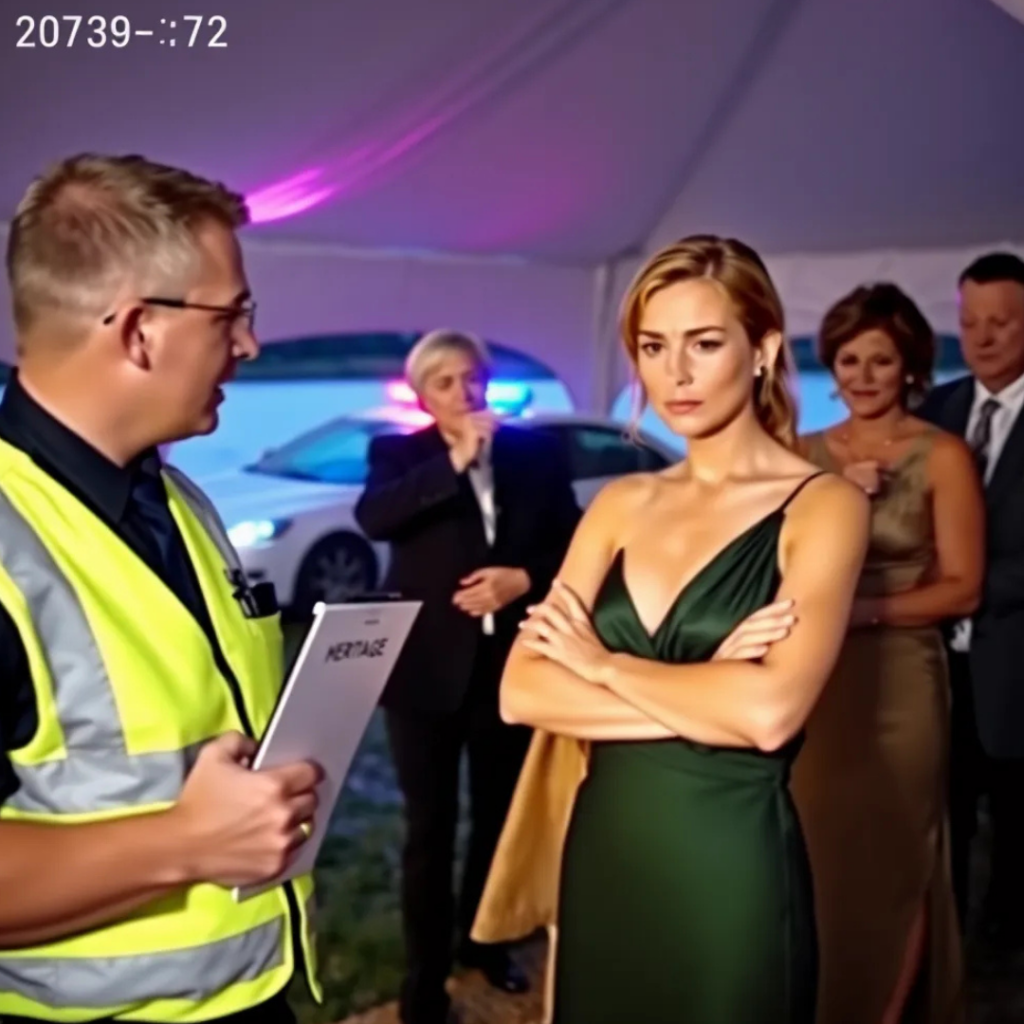
The moment I stepped onto my own stone walkway, conversation thinned. Faces turned. Madison’s fiancé—Logan—looked at me like he was trying to place a waitress he’d tipped last week.
Then my mother, Janet, strode toward me with a tight smile that didn’t reach her eyes. Madison followed, clutching her ring hand to her chest like a prop.
“You’re early,” Mom said. Her tone was wrong—too bright, too loud.
“I’m not early,” I replied. “It’s my house. I came to say hi.”
Madison’s smile sharpened. “Who are you?”
I blinked. “Madison, knock it off.”
She turned to Logan and two of her friends. “I told you. This is what she does. She shows up and tries to ruin everything.”
Mom stepped closer, blocking me from the deck. “Ma’am,” she said, projecting like she was addressing a courtroom, “you need to leave. You weren’t invited.”
The word ma’am landed like a slap. I glanced around, waiting for someone to laugh. Nobody did.
“I’m Avery Bennett,” I said slowly. “This is my property. Ask anyone. My ID—”
Madison’s voice snapped. “Don’t touch anything. Don’t go into the house.”
Mom pulled out her phone and dialed, eyes never leaving mine. “Yes,” she said into the receiver. “We have a stranger trespassing. She won’t leave. She’s causing a disturbance.”
My stomach dropped so hard I felt it in my knees. “Are you serious?”
Madison leaned in, her perfume sweet and poisonous. “You always wanted to be the victim,” she whispered. “Here. Have it.”
The party watched. The servers paused. Logan’s jaw tightened, but he didn’t move. I realized, with a cold clarity, that this wasn’t a prank.
This was a performance—and I was the villain they’d rehearsed.
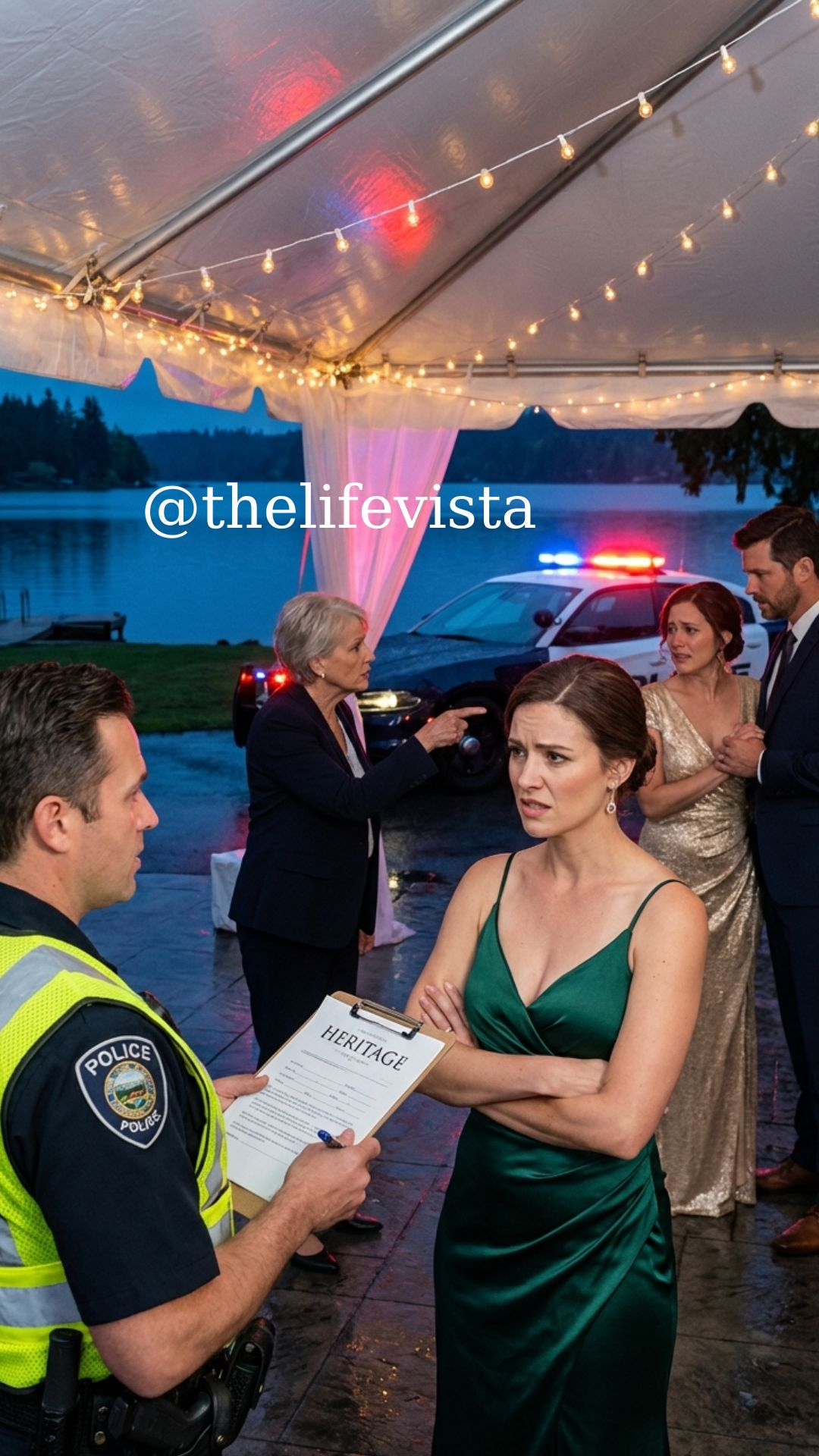
Two squad cars arrived within minutes. Red and blue lights washed over the lake and the white tent. An officer approached, hand near his belt, posture cautious.
“What’s going on?” he asked.
Mom pointed at me, eyes glassy. “That woman came onto our property. She’s harassing my daughter.”
“Our property?” I repeated.
Madison clung to Mom’s arm. “Please,” she told the officer, voice trembling perfectly. “I don’t know her. She’s been stalking me online.”
The officer looked at me. “Ma’am, can I see your ID?”
I handed it over. He studied it, then studied me, then glanced at Mom and Madison as if trying to reconcile reality with their confidence.
Mom didn’t even blink. “Fake,” she said instantly. “She’s done this before.”
Something inside me went quiet. Not rage—something colder. The realization that arguing would only make me look like what they wanted: unstable, desperate, dangerous.
I took a slow breath and gave the officer a small, cooperative smile.
“I understand,” I said. “If they feel uncomfortable, I’ll leave.”
Madison’s eyes widened a fraction. Mom’s mouth tightened, disappointed I wasn’t screaming.
I handed the officer my ID back without fighting for it. “No problem,” I added, pleasant as a customer-service rep. “I won’t ruin their celebration.”
I walked back to my car while a hundred eyes followed me, and I heard Madison exhale a laugh like she’d won something.
I drove away without a scene.
But as I passed the main road, I pulled over, opened my notes app, and typed one sentence:
If they want to pretend I’m a stranger, I’ll make sure the law agrees
By Monday morning, the humiliation had hardened into precision.
I didn’t start with revenge. I started with paperwork.
The vacation home wasn’t a “family house.” It was mine—purchased three years earlier with my bonus from a Chicago consulting firm and a small inheritance from my dad, Thomas Bennett. The deed was in my name only. The utilities were in my name. The insurance policy was in my name. And, crucially, the security system was in my name—with cloud backups.
I called my attorney first. Caleb Foster, calm and dry, the kind of man who made chaos sound manageable.
“I want you to tell me what my options are,” I said. “My mother and sister called police and claimed I was trespassing on my own property.”
A pause. “Do you have documentation?”
“I have everything,” I said. “And I have cameras.”
Caleb exhaled softly. “Okay. Then we handle this the clean way.”
That afternoon I logged into my security portal. The footage was crisp: me arriving, smiling, Mom blocking the walkway, Madison whispering to me, Mom calling 911. You could hear Mom clearly say, stranger trespassing. You could hear Madison say, I don’t know her.
It was so blatant it almost looked staged—because it was.
I requested the police bodycam footage through a public records request. Caleb drafted a formal letter to the department explaining the situation and asking that the report be amended for accuracy. He also advised me to file a report of my own: false reporting and attempted unlawful eviction.
Then came the part that made my hands shake—not from fear, but from the weight of deciding to stop being convenient.
I changed the codes to the gate, the alarm, and the smart locks. I called the event rental company and told them their future bookings at the property were unauthorized unless they came through me directly. I called the cleaners and instructed them not to accept keys or instructions from anyone but me.
On Wednesday, my mother called.
“Avery,” she said, voice dripping with wounded dignity, “your sister is devastated. Why didn’t you come back? You embarrassed her.”
I stared at the wall, calm. “You told the police I was a stranger.”
“You were acting strange,” she snapped. “You’ve been bitter for years. Madison deserves a fresh start.”
“With my house,” I said.
“It’s just a house,” Mom replied, as if the words could erase mortgage statements. “Family shares.”
“Then why did you tell an officer you didn’t know me?
Silence—one beat too long.
Mom recovered. “Don’t be dramatic. It got out of hand.”
“I agree,” I said. “It got out of hand the second you called 911.”
Mom’s voice sharpened. “What are you doing?”
“I’m fixing it,” I said. “Legally.”
Her breath hitched. “You wouldn’t.”
I didn’t raise my voice. “You already did.”
That night, Madison messaged me from a number I didn’t recognize.
You’re insane. Mom said you’re trying to press charges. You always have to make everything about you.
I read it twice, then forwarded it to Caleb.
By Friday, the police department called me back. The tone was careful now, not suspicious.
“Ms. Bennett,” the officer said, “we reviewed your documentation. The property is clearly yours. The report… contains statements that appear inconsistent.”
“Inconsistent,” I repeated.
“We’ll be speaking with the reporting parties,” he said. “Would you like to file a formal complaint?”
“Yes,” I said. “I would.”
I filed it. Caleb prepared a civil cease-and-desist as well, in case Mom and Madison tried to return. He also suggested something that felt both petty and perfectly fair:
“Since they publicly asserted you’re a stranger,” he said, “you can formally revoke any implied permission for them to be on the property. Written notice. Certified mail.”
So I did.
I sent my mother and my sister certified letters stating they were no longer authorized to enter my property for any reason and that any attempt would be treated as trespassing.
Then I waited—not with hope, but with certainty.
Because people who create a scene to win don’t stop when they win once.
They escalate.
The next weekend, my phone started buzzing at 7:14 a.m.
It was Logan.
I almost didn’t answer. Then I did, because curiosity can be sharper than anger.
“Avery,” he blurted, voice tight. “I—I didn’t know who else to call. Your mom is freaking out.”
I sat up in bed. “Why are you calling me?”
“Because Madison said you’re… doing something. She says you’re trying to ‘steal’ the lake house from them and ruin the engagement. And now the police are involved and—” He swallowed. “They’re at the property. Right now. And there are squad cars.”
I didn’t move for a second. “They went back?”
Logan sounded panicked. “They said it’s for ‘planning.’ Madison invited her bridesmaids. There’s a photographer. They were setting up again. Then the cops pulled up and told everyone to step away from the doors.”
I closed my eyes and let the calm settle. “Logan,” I said gently, “they’re trespassing.”
A long silence. “But… Janet said the house was a ‘family asset.’ She said your dad—”
“My dad is dead,” I said. “And he left me a small inheritance. I bought that house. The deed is in my name.”
Logan’s voice dropped. “Madison told me you’re unstable. That you have… episodes.”
I laughed once, softly. “Did she also tell you she didn’t know me? To my face?”
Logan didn’t answer. That was answer enough.
I got dressed and drove out, not to confront them, but to witness what happened when lies hit a wall of documentation.
When I arrived, the driveway was crowded with cars and folding chairs and one very confused catering van. Two officers stood near the entrance. My mother was mid-speech, hands waving, face flushed with outrage. Madison was crying in a way that seemed aimed at the photographer.
And Caleb—my attorney—was there too, standing slightly apart, holding a folder.
He nodded when he saw me. “Perfect timing.”
Mom spotted me and marched forward like she could shove reality back into the shape she preferred.
“There she is!” she shouted to the officers. “That’s her. She’s harassing us again. Arrest her!”
One officer turned to me. “Ms. Bennett?”
“Yes,” I said. I didn’t look at Mom. I looked at the officer. “I’m the homeowner. I revoked permission in writing. They were served. I have the receipts.”
Caleb handed the officer the folder. Inside were copies of the certified letters, delivery confirmation, the deed, and the previous incident report.
Madison’s crying paused for half a second. “Mom?” she whispered, suddenly smaller.
Mom’s face tightened. “This is ridiculous. You can’t do this to your own family.”
The officer’s tone remained neutral, which somehow made it harsher. “Ma’am, you’ve been notified you’re not authorized to be here. That makes this trespassing. Also, we need to talk about the false report from last week.”
Mom’s eyes widened. “False?”
Madison snapped, “She was acting—”
“Ma’am,” the second officer interrupted, firmer, “we have footage. We also have bodycam.”
Madison’s mouth opened, then shut.
And then, like dominoes, the scene turned.
The bridesmaids who’d been smirking looked suddenly uncomfortable. The photographer lowered his camera. The catering driver backed slowly toward his van like he didn’t want to be part of whatever this was.
Logan stood near his car, staring at Madison like she’d changed species.
Mom tried to rally. “Avery, please. You’re doing this to punish us.”
“No,” I said, finally looking at her. My voice was steady. “You did this to punish me. I’m just not absorbing it anymore.”
The officers asked Mom and Madison for IDs. Mom protested loudly—loud enough that the lake carried it. Madison cried harder. And the more they performed, the worse it got, because performance doesn’t work on paperwork.
I didn’t have them arrested. Not because I was soft, but because I didn’t need to be cruel to win. The officers issued formal trespass warnings and documented everything. They also took statements about the previous false report.
As Mom and Madison packed up in furious, frantic silence, Logan walked toward me.
“I’m sorry,” he said. His eyes were red, not from tears—stress. “I didn’t know.”
I shrugged. “You were told a story that benefited them.”
He nodded once, swallowing hard. “Is it true she said she didn’t know you?”
I met his gaze. “To an officer. On my front walkway.”
Logan looked past me at Madison, who was yanking decorations out of the grass like she wanted to tear the day apart. His shoulders sagged.
A week ago, they’d called the police and told everyone I was a stranger.
Now, in front of the same lake and the same tent and the same audience, the police were explaining—calmly, officially—that the strangers were them.
And for the first time in years, I felt something unfamiliar and clean:
Not revenge.