It was like a cold wave crashing over me. The words lingered in the air, each syllable dripping with a formality that felt painfully out of place. Balanced photos. Symmetry. As if a wedding, a celebration of union and love, could be boiled down to a perfectly curated image. My mind struggled to comprehend how I, Gareth’s father, who had been there for every scraped knee, every school recital, every awkward teenage moment, was now being sidelined for the sake of aesthetics.
I stood there, phone in hand, replaying the conversation in my mind. How had it come to this? I thought about Sylvia, imagining her reaction if she were beside me. Her sense of fairness and honesty would have cut through the situation like a scalpel, precise and unyielding. But she wasn’t there, and I felt the weight of her absence more keenly than ever.
The days that followed were a blur of motions stripped of meaning. I went through the motions of preparing for the wedding, yet each task felt hollow. I spent restless nights grappling with a mix of emotions—hurt, anger, confusion—each one twisting into an unrecognizable knot inside my chest.
When Gareth finally confronted me, it was under the pretense of discussing the logistics of the rehearsal dinner. The conversation quickly turned into a bitter exchange. He accused me of being petty, of letting a small oversight cloud the joy of his impending marriage. I listened, my patience waning, as Gareth defended decisions that felt increasingly alien to me.
“You’re being petty because of the rehearsal dinner thing,” he said, exasperation leaking into his voice.
I looked at him, searching for the son I knew beneath the veneer of defensiveness. “It’s not just about dinner, Gareth. It’s about being part of your life.”
But my words seemed to fall into the abyss between us. The space that had once been filled with shared memories and mutual understanding now felt like an insurmountable chasm.
And then, the lawsuit. I received the papers with disbelief, my heart sinking as I saw Gareth’s name emblazoned across the top, aligning him with demands that could only be described as mercenary. The honeymoon costs. More money. More transactions. Each page felt like a betrayal bound in legalese.
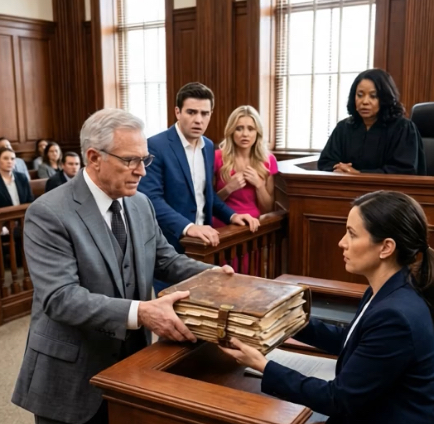
As I sat in that courtroom, a binder of meticulously kept records in front of me, the reality of my son’s actions came crashing down. The judge, a woman with keen eyes and a weary expression, regarded us both with an unreadable gaze. She removed her glasses, fixing us with a look that transcended the mere legalities of the situation.
“In matters of the heart,” she began, her voice resonating through the silence, “the law can only do so much.”
Her words hung in the air, transcending the argument at hand, cutting to the raw, exposed nerve of what lay beneath this family dispute. It was a moment of clarity amidst the chaos, a reminder that while money and legalities might be the battlegrounds we fought upon, it was love, or the lack thereof, that truly lay at the heart of our conflict.
The room was silent, but inside me, a tumult raged on. There, in that moment, I realized that no court ruling could repair the break that had formed between my son and me. It was something deeper, something only time, reflection, and perhaps forgiveness could ever hope to mend.