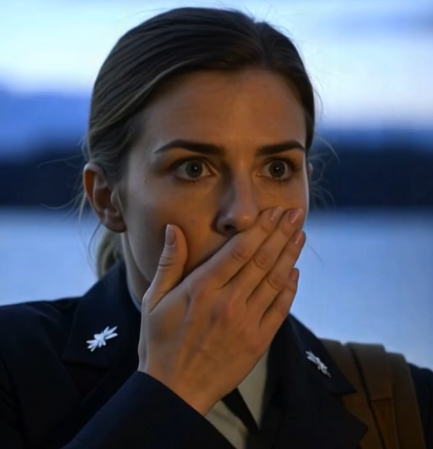
Megan’s words echoed in my mind as I crouched there, the cool air of the cabin settling around me. “Fits you perfectly, you stinking woman.” The spite in her voice had been unmistakable, but now, kneeling on the worn wooden floor, I realized just how wrong she was. My father had left me something more than a dilapidated cabin in the woods. He had left me a mystery to unravel, a legacy to uncover.
The metallic object under the floorboard gleamed dully in the dim light filtering through the window. Carefully, with trembling fingers, I unfolded the oilcloth. Inside, lay an old, intricately designed metal box. Its surface was etched with patterns that looked like they belonged to another era, a time when craftsmanship was an art, not a task. It was heavy, signifying importance, the kind of weight that was both physical and metaphorical.
I sat back on my heels, the box in my lap, and traced the carvings with my fingertips. There was no lock, just a simple latch that seemed almost anticlimactic given the significance the moment held. I hesitated, savoring the anticipation that thrummed through me, then flipped the latch open. The lid creaked slightly as it lifted, revealing its contents.
Inside, nestled in the dark velvet lining, were several items: a stack of letters tied with string, a faded photograph of a young couple standing in front of the cabin, a small, rusted key, and a journal with a worn leather cover. I picked up the photograph first, recognizing my father instantly, youthful and carefree beside a woman who must have been Grandma Rose. This was a piece of my history I never knew existed, a bridge to a past that had been kept from me.
The journal beckoned next. Its pages were yellowed with age, the ink faded but legible. I flipped through, skimming entries that chronicled life in the cabin, stories of resilience, love, and family. Each word felt like a direct message from my father, speaking to me across time. He had loved this place, poured himself into it, into the land and the life it represented. The cabin wasn’t just a building; it was a testament to the enduring spirit of our family, to our roots.
I placed the journal back in the box and lifted the letters. The paper was fragile, the kind that crumbled if handled carelessly. They were addressed to my father, signed “Rose.” As I read through them, I could almost hear her voice, full of wisdom and warmth. She wrote about the land, the seasons, and the quiet beauty of living among the trees. Her words painted a picture of resilience and strength, the same qualities that had drawn my father here time and again.
The little key intrigued me. It was too small for the cabin door, more suited for a lockbox or perhaps a chest. I pondered its purpose, my mind spinning possibilities. This cabin held more secrets, more stories, and I was determined to uncover each one.
As the sun dipped below the horizon, the cabin glowed with a warmth that felt like belonging. I wasn’t just the owner of this cabin; I was its steward, its keeper. Jack’s words came back to me, “Sometimes the most valuable things get hidden in the places people laugh at first.” My inheritance was more than land or a building; it was a connection to my past, to a part of my father that he had chosen to share with me alone.
Megan had the luxury of a Miami penthouse, but here, in this cabin, I had something much more valuable: history, heritage, and a sense of place. This was my inheritance, and it was worth more than any piece of real estate.