Days of Our Lives Shocker: Javi Has Been Hiding a New Romance Even Though Leo Chose Him

Financial support for this program may supposedly come from charitable contributors and mysterious sponsors, but no amount of generosity could prepare Salem for the emotional chaos waiting just around the corner. What initially appears to be a thoughtful discussion about morality and justice soon transforms into a complicated storm of romance, dishonesty, and heartbreaking decisions. Those very conflicts now threaten to destroy the relationships connecting Javi, Leo, and the people closest to them.
Everything begins with a seemingly unrelated scenario, one that initially sounds more like a philosophical puzzle than a warning about personal relationships. Picture yourself controlling a powerful machine that cannot be stopped. It is already moving at full speed, and disaster seems inevitable. Five people are directly in its path, and you have no way to prevent their deaths unless you intervene. There is another route available, however, and switching to it would save those five individuals while putting one different person in danger.
That impossible decision becomes much more than an intellectual exercise. It reflects the emotional conflict now surrounding Javi. In Salem, every decision carries consequences, and the correct answer is rarely obvious. Recently, Javi has found himself standing at a similar crossroads, facing a choice that could determine not only whose heart gets broken but also whose happiness survives.
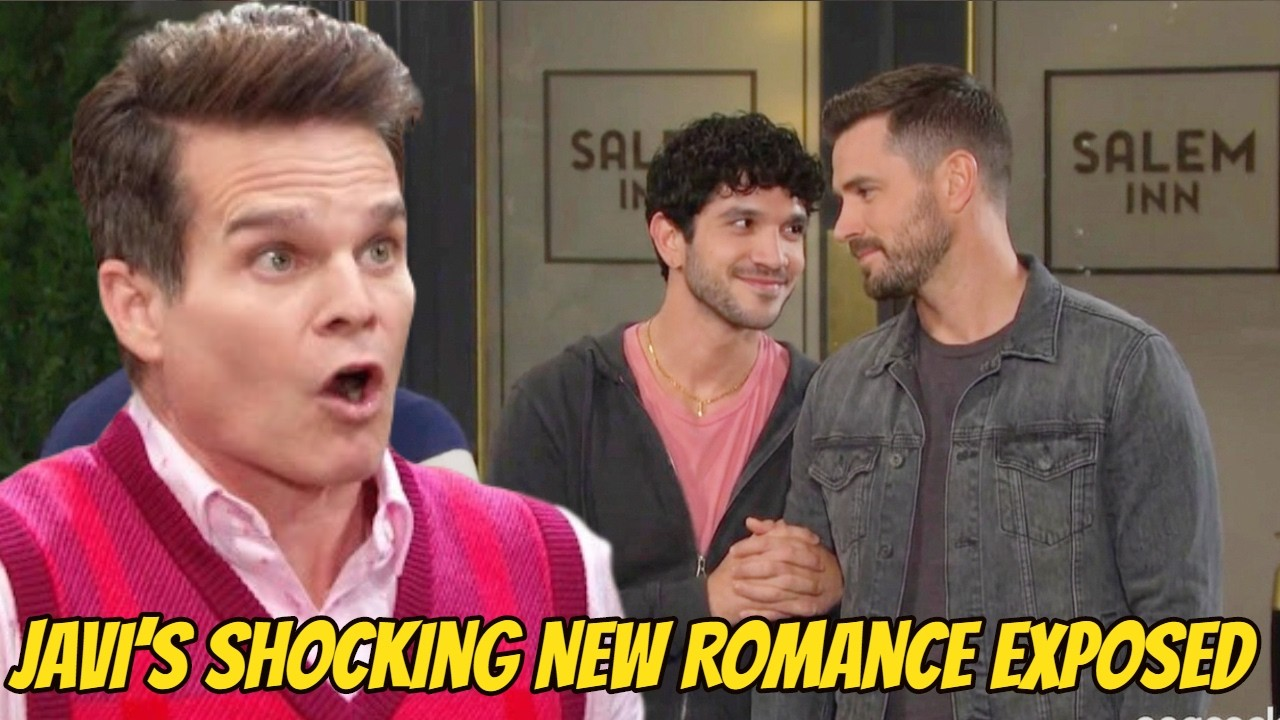
When Leo decided that Javi was the person he wanted, the moment appeared to mark an important turning point in their relationship. It felt like an unmistakable declaration of affection, loyalty, and commitment. Yet something was happening beneath the surface that nobody anticipated. Even as Leo believed their bond was becoming stronger and more secure, Javi had already begun moving emotionally in another direction. Unknown to Leo, he was developing a new romantic connection and concealing an astonishing truth: he had another boyfriend, someone whose existence could completely transform their future.
The central question is as disturbing as the runaway trolley dilemma itself: what is the morally correct decision? More importantly, how would any of us behave if we were forced into the same position?
Many people would insist that the most ethical solution is whichever choice prevents the greatest suffering. If causing one person heartbreak could protect several others from greater pain, wouldn’t that represent the preferable outcome? Unfortunately, human relationships in Salem cannot be reduced to neat mathematical calculations. Feelings make every situation more complicated. Leo is not some anonymous figure in a hypothetical scenario. He is a real person within this story, emotionally invested in someone he trusts and completely unaware that his happiness may soon collapse.
There will undoubtedly be viewers who sympathize with Javi. After all, shouldn’t someone have the freedom to pursue genuine love, even when doing so causes another person pain? Wouldn’t it be more truthful to acknowledge that a relationship has changed rather than continue pretending that everything is fine? Viewed this way, Javi’s behavior might resemble the difficult sacrifice of one relationship in pursuit of a more authentic emotional future.
Others, however, will interpret the situation very differently. In their eyes, Javi is not merely trying to avoid a disaster that was already unavoidable. Instead, he is creating the crisis through his own decisions. Much like deliberately pushing an innocent person into danger to prevent another tragedy, secretly beginning a new relationship seems less like an unfortunate twist of fate and more like a conscious act of betrayal. The distinction may appear small, but morally it changes everything. Is Javi responding to emotions he cannot control, or is he knowingly choosing to deceive someone who loves him?
That single question becomes the dividing line between sympathy and condemnation.
One interpretation suggests that Javi has simply been overtaken by circumstances. His feelings evolved, his emotional priorities shifted, and he is attempting to find a way forward that causes the least possible damage. Another interpretation paints a far more troubling picture. According to that view, Javi is actively creating the problem by allowing Leo to believe their relationship remains secure while privately building a romantic future with somebody else. Defending that version of his actions becomes considerably more difficult.
The moral conflict grows even more intense when intention enters the conversation. Is allowing someone to suffer equivalent to deliberately causing their suffering? Changing the direction of an existing problem may seem fundamentally different from creating the problem yourself. That is precisely why Javi’s hidden romance carries such explosive potential. His secrecy is not simply something happening around him. It requires decisions, planning, and deliberate participation. Every concealed conversation, every private encounter, and every affectionate exchange with his new boyfriend deepens the significance of what he has chosen to do.
And standing at the center of the coming devastation is Leo.
Leo genuinely believed that Javi had chosen him. That belief carries enormous emotional weight. In relationships where trust is fragile and loyalty means everything, knowing that someone has selected you as their partner represents much more than a romantic gesture. It creates an expectation of honesty and devotion. Yet that expectation is now being quietly dismantled, piece by piece, while Leo remains completely unaware of what is happening behind his back.
Could Leo ever forgive Javi after discovering the truth? Would a voluntary confession soften the betrayal compared with being exposed by someone else? Or has Javi already crossed an emotional boundary that cannot be repaired, regardless of how the secret eventually comes to light?
These troubling possibilities introduce another dimension to the ethical dilemma. Imagine witnessing a situation in which you are not directly responsible for the danger but possess the ability to change what happens. Would you interfere, knowing that your involvement could hurt someone? Or would you refuse to intervene and allow events to continue naturally?
Javi did not simply remain on the sidelines and watch his circumstances unfold. He made choices and took action. That distinction is exactly what could make the revelation so emotionally destructive.
Fairness also deserves consideration. Suppose everyone involved had been fully informed from the beginning. Suppose Leo understood what Javi was feeling and Javi had openly acknowledged his growing connection with someone new. Would the emotional consequences have been different? Knowledge, personal freedom, and the opportunity to make informed decisions all influence how we evaluate another person’s conduct. Salem has always been a place where secrets carry tremendous power, but those secrets almost inevitably demand a price.
Some might argue that if Leo had been aware of the circumstances and willingly accepted them, the situation would no longer constitute the same kind of betrayal. But that is not the scenario being described. Instead, Javi apparently made his decisions without Leo’s knowledge, assuming control over a situation that would profoundly affect another person’s life. Like someone deciding which track a runaway vehicle should follow, he placed himself in the position of determining who would face the consequences.
And beneath that decision lies an even more unsettling question: who has the authority to decide whose suffering deserves greater consideration?
Javi may genuinely believe that he is pursuing the happiness he deserves. Perhaps he considers his new relationship an opportunity to experience a deeper, more fulfilling connection. But what will that happiness ultimately cost? Will Leo be left emotionally shattered? Will their friends and loved ones become trapped in the resulting conflict? By attempting to build a promising new future, Javi may unintentionally unleash a wave of emotional damage extending far beyond the two people directly involved.
Still, there is another way of examining this situation, one that refuses to measure morality exclusively through the consequences of an action. According to this perspective, certain behaviors remain unacceptable regardless of how much happiness they eventually produce. Betraying someone’s trust is still betrayal. Deliberately misleading a partner is still dishonesty. Finding joy with another person does not automatically erase the suffering inflicted on someone who believed they were loved.
Under this interpretation, Javi’s concealed romance does not represent a complicated moral compromise. It represents a straightforward violation of trust. The problem is not simply the emotional destruction that might follow. The problem lies in the nature of the deception itself.
This is where the unfolding drama in Salem begins to resemble the moral complications of everyday life. People rarely evaluate situations solely by examining their final results. We also consider motivation, individual behavior, personal responsibility, and the principles guiding someone’s actions. Quite often, those different standards lead us toward completely contradictory judgments.
And that is what makes this conflict so compelling: there is no simple solution that satisfies everyone.
Javi’s situation involves far more than the discovery of an undisclosed boyfriend. At its heart, the story explores what happens when personal desires collide with obligations to other people. It examines the painful struggle between pursuing romantic fulfillment and respecting promises already made. Most importantly, it considers both the obvious and unexpected consequences that emerge when someone attempts to reconcile those competing priorities.
As the shocking truth moves closer to being exposed, emotional turmoil seems almost inevitable. Leo is expected to discover what Javi has been keeping from him. A secret of this magnitude cannot remain buried indefinitely. And when the truth finally emerges, the most important question will not simply concern what Javi did. Everyone will also want to understand what motivated him to make those decisions in the first place.
Was he sincerely attempting to reduce the amount of suffering involved? Or did he place his own desires above everyone else’s feelings?
Ultimately, the developing storyline in Salem reaches beyond an ordinary romantic scandal. It becomes an examination of personal morality and accountability. Much like the difficult ethical scenarios introduced at the beginning, it challenges both the characters and the audience to confront uncomfortable questions about fairness, loyalty, personal freedom, and the difference between right and wrong.
Because once the full circumstances become visible, everything changes. When a familiar relationship is suddenly revealed in an entirely different light, returning to the innocence of the past becomes impossible. Knowledge cannot simply be erased, and a painful revelation cannot be transformed back into an undiscovered secret.
That irreversible change may prove to be the most powerful twist of all.
Javi’s hidden relationship represents more than a private act of disloyalty. It could become the event that forces everyone around him to reconsider their deepest convictions. Friendships may be tested, loyalties may shift, and characters who once believed forgiveness was simple may discover its true difficulty. The distinction between the wounded and those responsible for the wounds could become increasingly complicated, just as the boundary between understanding someone’s actions and excusing them begins to disappear.
And much like the impossible moral choices that inspired this discussion, the conflict may never produce an ending that feels entirely fair or emotionally satisfying.
There may be nothing left except consequences.
Nothing except the emotional wreckage.
And one persistent question that continues to echo long after the truth has been revealed:
When every available decision will inevitably cause someone pain, what do your choices reveal about the kind of person you truly are?