The Alistair Mansion—an architectural masterpiece of marble and glass perched in the most elite hills—stood as a symbol of luxury few could ever imagine. Yet behind its grand carved oak doors and flawlessly manicured gardens, a quiet sense of dread lingered. The air, usually perfumed with the sweet fragrance of rare orchids, grew stifling whenever Sophia, the fiancée of tycoon Frederick Alistair, appeared. Her presence carried arrogance and disdain, a force that disrupted the peace in every room. Sophia believed that the dazzling solitaire on her finger—brilliant even in low light—gave her the right to demean anyone she pleased.
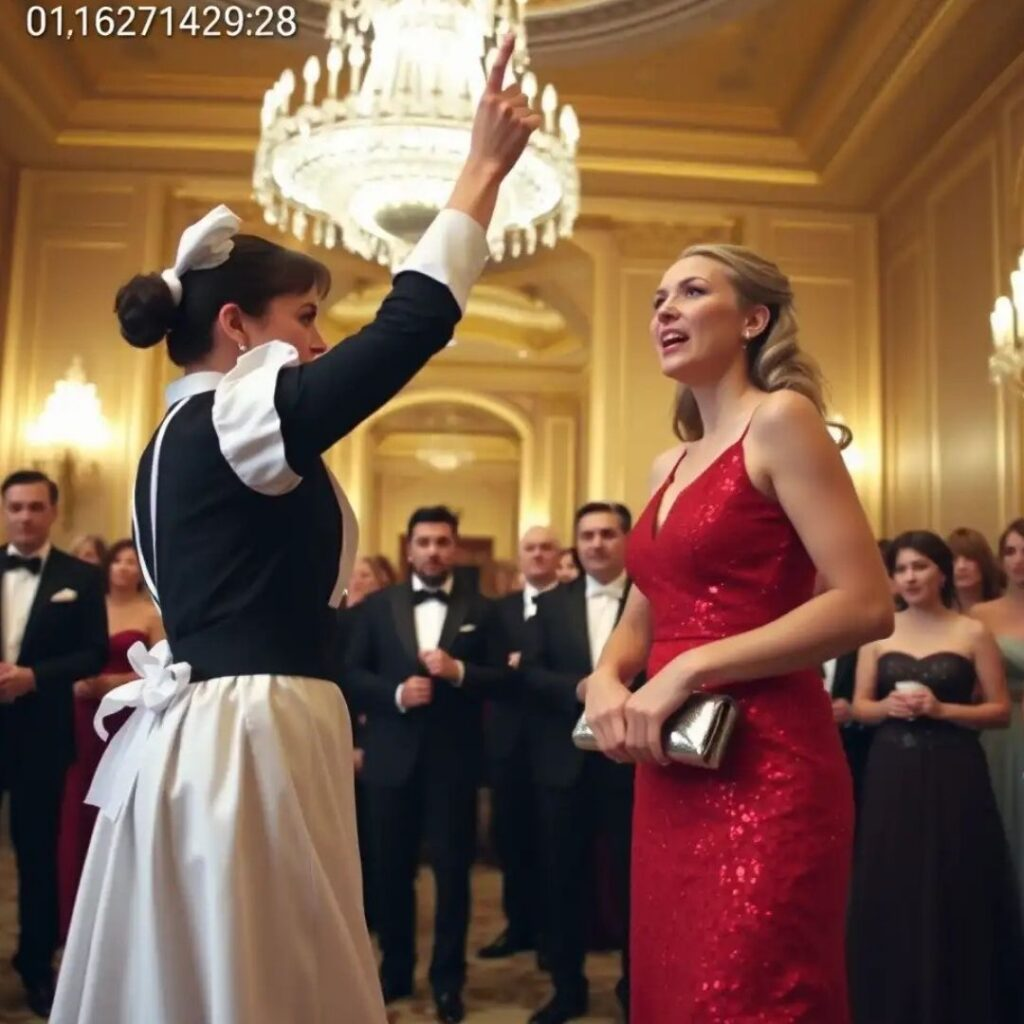
Each morning, the soft chime of porcelain bells in the entrance hall was overwhelmed by the sharp click of her stiletto heels striking the polished mahogany floors. That sound alone sent a wave of tension through the staff. A coffee with a gram too much sugar, an imaginary stain on a Persian rug only she could see, or a five-second delay in delivering her mail—any minor flaw could trigger an outburst that left everyone shaking. The butlers, cooks, gardeners, even the veteran head of staff who had served the Alistair family flawlessly for years, endured her cruelty in silence. Heads bowed, voices hushed in kitchens and service corridors, they shared a common fear and helplessness under the rule of the woman destined to become mistress of the house.
But the mansion belonged to Frederick Alistair—a visionary entrepreneur and, at seventy, a gentle man, though often absorbed by his global ventures. Oblivious to Sophia’s true character, he viewed her as elegant and passionate, perhaps fiery, but never cruel. His wealth, built over decades in the technology world, was vast—billions, properties across continents, and an art collection rivaling renowned museums. And Sophia, with her cool beauty and carefully crafted charm, had convinced him she was the perfect partner to share both his life and his immense fortune.
It was within this oppressive luxury and climate of fear that Mariana arrived. Frederick’s new personal assistant, she was so discreet she was nearly invisible. Calm by nature, with large dark eyes that observed without judgment, she spoke softly—almost in a whisper—and moved with such quiet precision that she often escaped notice. To Sophia, she seemed like easy prey, just another servant to crush beneath her heel. A young woman with no obvious experience among the elite appeared to be the ideal target for her cruelty.
The moment that altered everything unfolded during an important meeting in the main library. Frederick, reading glasses resting on the bridge of his nose, reviewed financial documents while Sophia sat beside him, scrolling through travel plans. Mariana stood silently in the corner, taking notes. Suddenly, Sophia’s expression twisted in exaggerated outrage.
“Mariana!” she snapped, her voice sharp as broken glass. “Look at this! A colossal blunder in my schedule! You’ve booked my appointment with the jewelry designer on the same day as my Pilates class! How is this possible?!”
Her voice climbed into a piercing shriek that echoed through the towering room, seeming to rattle the ancient books lining the shelves.
“You’re useless! You’re not even fit to breathe the same air as me! Your incompetence is an insult to human intelligence!”
Silence fell like a heavy curtain. Frederick looked up in shock. The head butler and the chief of staff lowered their eyes, bracing themselves for Mariana’s humiliation.

But Mariana did not bow her head.
She lifted her gaze calmly, her dark eyes locking with Sophia’s burning stare. Slowly, almost imperceptibly, her hand moved to the cloth bag at her side. She pulled out her phone.
Sophia’s cruel smile—her look of anticipated victory—froze instantly.
Something glowed on Mariana’s screen. A detail. An image. A message.
Sophia’s face drained of color. Her eyes widened. Her lips parted, but no sound emerged—only a strangled breath, as though the air had been ripped from her lungs. She rose unsteadily from her chair, hand shaking as she pointed at Mariana’s phone.
Sophia staggered back as if struck, her manicured fingers clutching the edge of the table for support.
“W-Where did you get that?” she whispered, her voice suddenly stripped of all cruelty.
Frederick stood up slowly. “Sophia?” he said, confused. “What is it? What’s wrong?”
Mariana finally spoke. Her voice was calm, steady—almost gentle.
“I’m sorry, Mr. Alistair. I never intended to reveal this like this. But I couldn’t stay silent anymore.”
She turned the phone so Frederick could see.
On the screen were copies of emails, bank transfers, and recorded messages—months of carefully documented evidence. Sophia had been siphoning money from secondary accounts, manipulating legal documents, and coordinating with an outside lawyer to quietly alter Frederick’s will after the marriage. Every step had been planned. Every signature rehearsed.
Frederick’s face drained of color as he scrolled.
“This… this can’t be real,” he murmured.
“It is,” Mariana said softly. “I was hired as your assistant six months ago. But before that, I worked in forensic accounting. I noticed discrepancies in your personal ledgers. At first, I thought it was an error. Then I saw her patterns.”
Sophia let out a sharp, hysterical laugh. “You think a nobody like you can destroy me?” she snapped, but her voice cracked. “Frederick, she’s lying! She’s obsessed—”
“Enough.” Frederick’s voice cut through the room, firmer than anyone had ever heard it.
He looked at Sophia—not with love, but with a quiet, devastating clarity.
“Is any of this false?” he asked.
Sophia opened her mouth. Closed it. Looked around the room, at the staff she had tormented, at the man she believed she owned.
Silence answered for her.
Security was called. The engagement was terminated that same hour. By evening, Sophia was escorted out of the Alistair Mansion with nothing but the designer bag on her shoulder and the reputation she had shattered herself.
An internal investigation followed. Charges were filed. The altered documents were voided. Frederick’s inheritance—and legacy—was secured.
Days later, Frederick asked Mariana to join him in the winter garden.
“You saved me,” he said quietly. “Not just my fortune. My dignity.”
Mariana shook her head. “I only did what was right.”
He smiled. “That’s rarer than loyalty.”
Mariana was promoted to chief of staff, her presence no longer invisible—but deeply respected. The mansion changed. The air felt lighter. The staff walked freely again, no longer afraid of footsteps in the hall.
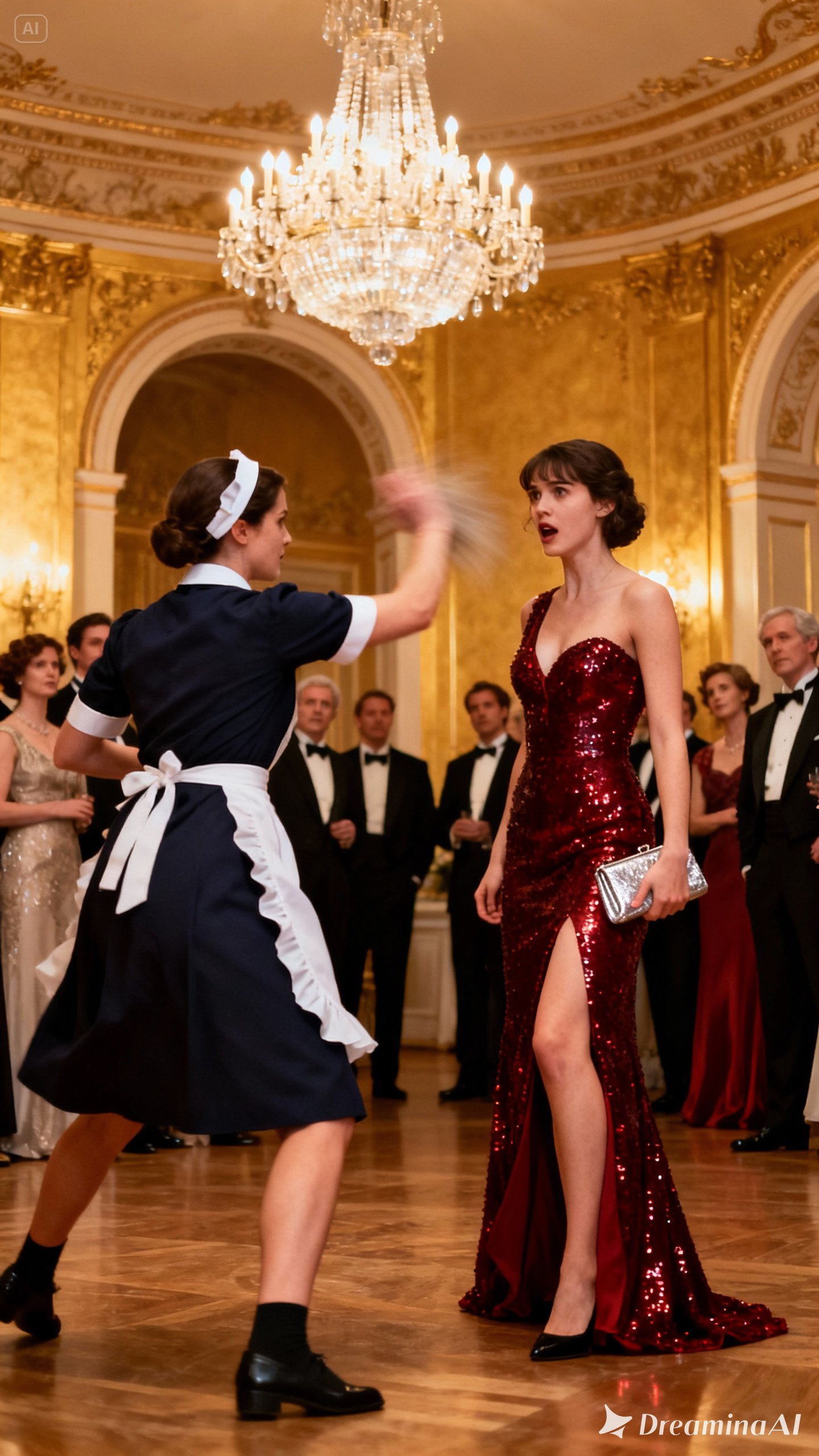
And as for Frederick Alistair, he learned a lesson worth more than billions:
The loudest threats often wear diamonds—
but sometimes, salvation arrives on silent feet.
The aftermath of Sophia’s departure was not a storm, but a profound, ringing silence that settled over the Alistair estate like a long-awaited fever breaking. While the staff celebrated quietly in the kitchens, Mariana knew that the real work—the surgical extraction of Sophia’s influence—had only just begun.
In the forty-eight hours following the confrontation, the mansion was transformed into a command center. Mariana, no longer playing the role of the submissive assistant, revealed the full extent of her background. She wasn’t just a forensic accountant; she was a specialist in high-net-worth asset protection who had been tipped off by an anonymous whistleblower within Sophia’s inner circle months prior.
“She wasn’t working alone, Frederick,” Mariana said, spreading a map of digital footprints across the library table. “She had a ‘fixer’—a disgraced lawyer named Marcus Thorne. They had already managed to place a lien on your property in the South of France as a ‘security deposit’ for a fake investment firm.”
Frederick, looking older but significantly more alert, traced the lines of the scheme with a trembling finger. “I was so blinded by the idea of a second chance at youth that I nearly handed her the keys to everything my father and I built.”
“Manipulation is a skill, Mr. Alistair,” Mariana replied gently. “She chose you because you have a heart. That isn’t a weakness; it was just an opportunity for her.”
A week later, Sophia attempted one last desperate play. She appeared at the front gates with a group of paparazzi, claiming she was being “held captive” from her belongings and that Frederick was suffering from “diminished mental capacity,” coerced by a predatory new assistant.
The staff watched from the windows, their breath hitching as the gates swung open. But it wasn’t Frederick who walked down the long gravel driveway. It was Mariana.
She walked with a poise that made the cameras stop flashing. She didn’t carry a weapon or a legal notice. She carried a single, sealed manila envelope.
“Go away, Mariana,” Sophia hissed, her eyes wild behind oversized designer sunglasses. “I’m getting what’s mine. Frederick will realize he can’t live without me.”
“He’s already learning,” Mariana said, her voice projecting with a calm authority that silenced the reporters. “But I think you should read this before the police arrive to serve the warrant for interstate wire fraud.”
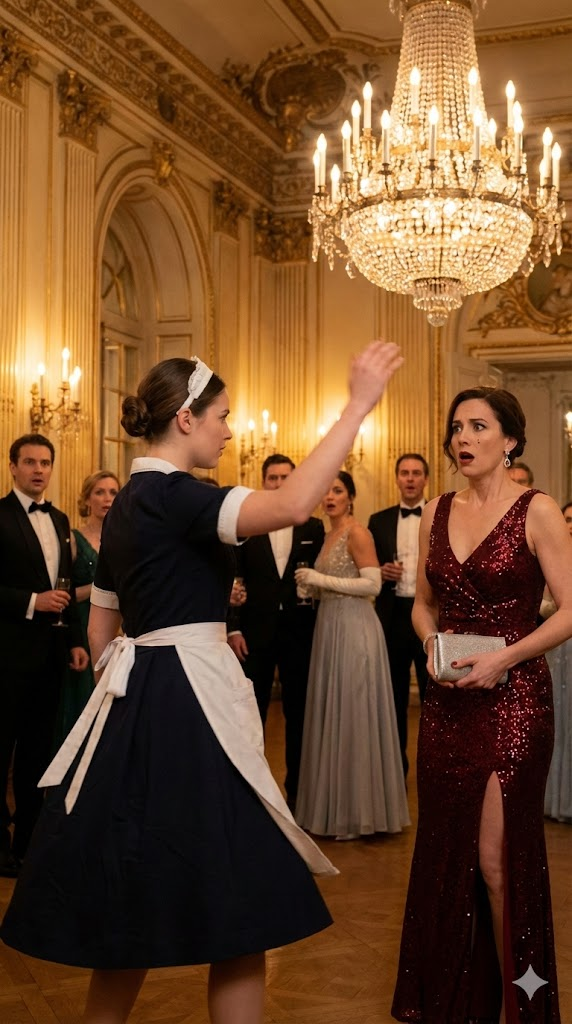
Mariana handed her the envelope. Inside were the transcripts of Sophia’s conversations with Marcus Thorne—conversations where she mocked Frederick’s “old-fashioned” kindness and detailed her plans to move him into a “specialized facility” within months of the wedding.
The color didn’t just drain from Sophia’s face this time; she looked as though she had turned to stone. The paparazzi, sensing the shift in the narrative, began snapping photos of the “Tragic Socialite” as she realized the evidence was insurmountable.
“The jewelry is already being appraised for the restitution fund,” Mariana added quietly. “You have ten minutes to leave the perimeter before the state troopers arrive.”
Without a word, the woman who had once terrorized the mansion turned and fled, her heels clicking a desperate, lonely rhythm on the asphalt.
The Alistair Mansion changed. The heavy velvet curtains were pulled back to let in the sun, and the “chime of porcelain bells” no longer signaled a coming storm.
Frederick Alistair didn’t just promote Mariana; he made her a partner in his philanthropic foundation. Under her guidance, the Alistair fortune wasn’t just protected—it was redirected. They established a fund for household workers who had suffered workplace abuse, a nod to the silent witnesses who had stood by Frederick during his blindest years.
One evening, as the sun dipped behind the hills, Frederick found Mariana in the winter garden, the same place she had once stood invisibly in the corner.
“I keep thinking about the day you showed me that screen,” Frederick said, sipping his tea. “You could have taken that evidence to the board. You could have sold it to the press. Why stay here and endure her insults for six months?”
Mariana looked out at the gardens, where the head gardener was now whistling as he worked.
“Because if I had just exposed her legally, you would have been a victim,” Mariana said. “But by exposing her in that room, in front of the people she hurt… I wanted to make sure you were a survivor. And I wanted the staff to see that the person with the loudest voice isn’t always the one in control.”
Frederick smiled, a genuine, deep-seated expression of peace. “You’re quite the strategist, Mariana.”
“I prefer the term ‘assistant,’” she said with a faint, rare sparkle in her eyes. “I just assist the truth in finding its way to the light.”
The Alistair legacy was safe. Not because of a will or a vault, but because a silent woman with a steady gaze had decided that some things—like dignity and justice—were worth more than sharing the same oxygen as a queen of lies.