The Birthday Party That Didn’t Feel Safe
The backyard looked like every other children’s party I had ever endured with a polite smile, because there were pastel balloons tugging at their strings, a long folding table covered in paper plates and bright frosting, and relatives laughing as though nothing in the world could be darker than a kid spilling punch on a new shirt. My nephew was turning six, and the adults were passing slices of cake like a ritual, talking about school districts and mortgage rates, while I tried to convince myself that showing up mattered, because family was supposed to be the place where you could breathe.
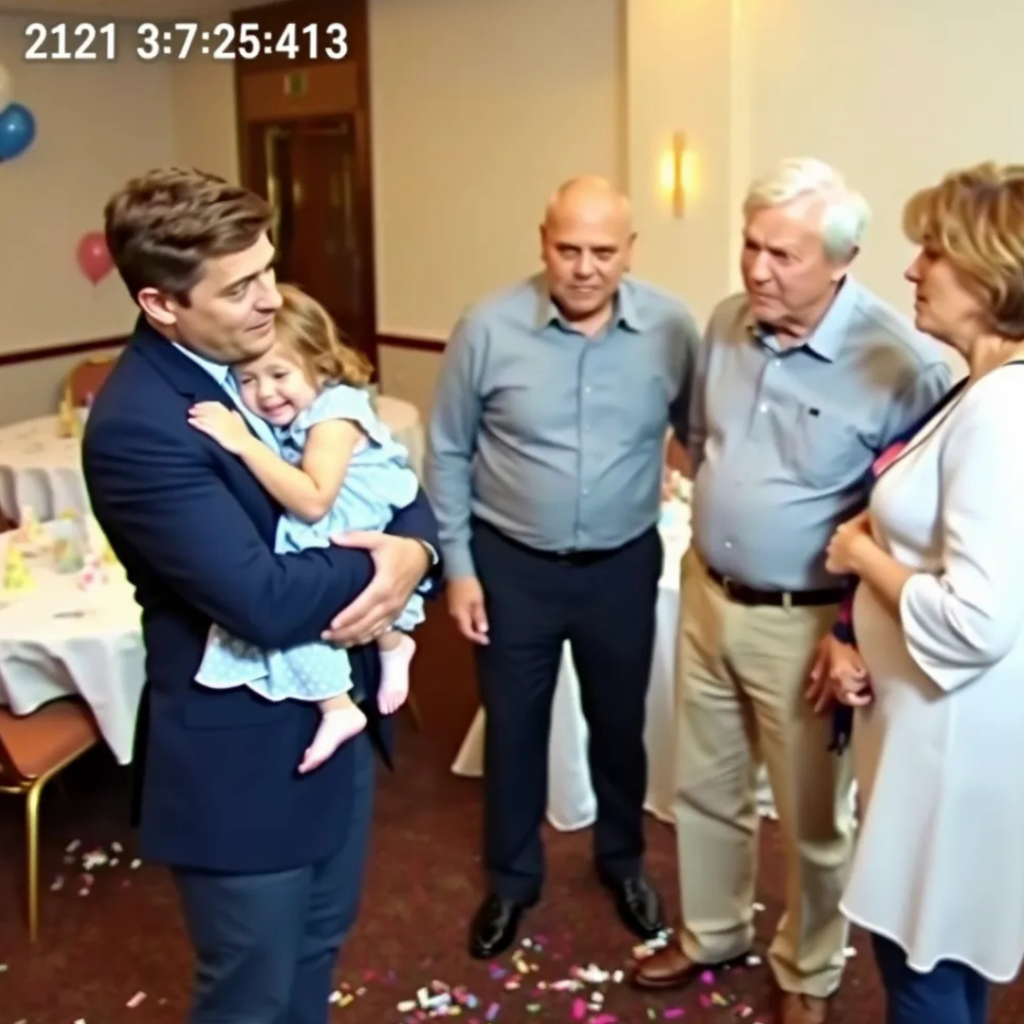
I had only stepped inside the house to find my daughter, because I hadn’t seen her in a while and the kind of quiet that follows a four-year-old is never the peaceful kind, it is the kind that makes your body understand something your mind is still refusing to name. I walked through the hallway toward my parents’ bathroom, calling softly, pretending I was relaxed, because I didn’t want to alarm anyone unless I had to.
When I opened the door, I found Lily crouched behind the toilet, pressed into the corner like she had tried to shrink into the tile, her small body shaking so hard that it seemed to rattle through her ribs, and her eyes looked unfocused in a way that made my stomach drop. She didn’t scream, and she didn’t run toward me, because she looked like she had already learned that loud reactions sometimes make things worse.
I lowered myself carefully, keeping my voice gentle even as my heart hammered.
“Sweetheart, it’s Dad,” I whispered, holding my hands out slowly. “Come here, you’re okay, I’ve got you.”
She reached for me with stiff, hesitant arms, and when I lifted her into my chest I saw the swelling along one side of her face, the kind of swelling that doesn’t happen from bumping into a doorframe, and I felt a cold clarity spread through my thoughts. As I adjusted her sleeves to check her arms, I saw several sharply defined, round marks that looked like they had been pressed into her skin with something hot, each one too similar to the next to be accidental, and the sight of them made my vision narrow as if the entire world had suddenly become a tunnel.
I didn’t ask her to explain right then, because she was trembling and exhausted and my priority in that moment was to move her out of that room, out of that house, and away from the people who were smiling outside like nothing could touch them. I carried her through the hallway and into the living room, stepping straight past the buffet table and the framed family photos, because I couldn’t pretend anymore, and because whatever story they were living in, I was done playing my role in it.
In the middle of the room, where everyone could see, I stopped, holding Lily against my shoulder so her face was hidden, and I looked directly at my sister, Tessa Lane, who sat on the couch with a wineglass tilted in her hand like she was hosting a fundraiser instead of attending a child’s birthday party.
My voice came out steady in a way that surprised even me.
“Who did this?” I asked, each word clipped by control.
Tessa blinked as if I had interrupted her entertainment, then she laughed loudly enough to turn heads.
“Oh my God, relax,” she said, waving a dismissive hand. “It was just a joke. She was whining, and she needed to toughen up.”
The room seemed to tilt again, not from dizziness this time but from disbelief that anyone could say something so casual with my child’s pain tucked into it. My mother, Linda, rose halfway from her chair, her lips parting as if she wanted to stop the conversation before it made the family look bad, and my father, Robert, stiffened near the kitchen doorway, already scanning the room for who might be watching.
I stepped closer to Tessa, not because I wanted a scene, but because I needed everyone to hear the line I was drawing.
“You don’t get to call that a joke,” I said, my voice low and controlled. “You don’t get to touch my child again, ever.”
Tessa’s smile sharpened. “You’re being dramatic,” she said, and she tried to stand, wobbling slightly.
I did not make a show of anger, and I did not try to be a hero, because I was carrying Lily and the only thing that mattered was getting her out safely, yet when Tessa reached toward Lily as if she had a right to prove she was in control, my body reacted with the kind of instinct that feels older than thought. I shoved her hand away and turned toward the door, and that was when my mother’s voice snapped across the room with a rage that did not belong to someone protecting a child.
“Get back here,” she shouted, as if my leaving was the real offense. “Don’t you dare do this to us.”
A glass struck the wall near the doorway, shattering with a loud crack, and for a fraction of a second the room froze in the kind of silence that happens when people realize the situation has crossed into something they cannot easily laugh off. I didn’t stay to argue, because arguing was what they wanted, and because I had learned the hard way that toxic families prefer debates over accountability.
I walked out with Lily in my arms, got her into the car, locked the doors, and drove straight to urgent care without looking back.
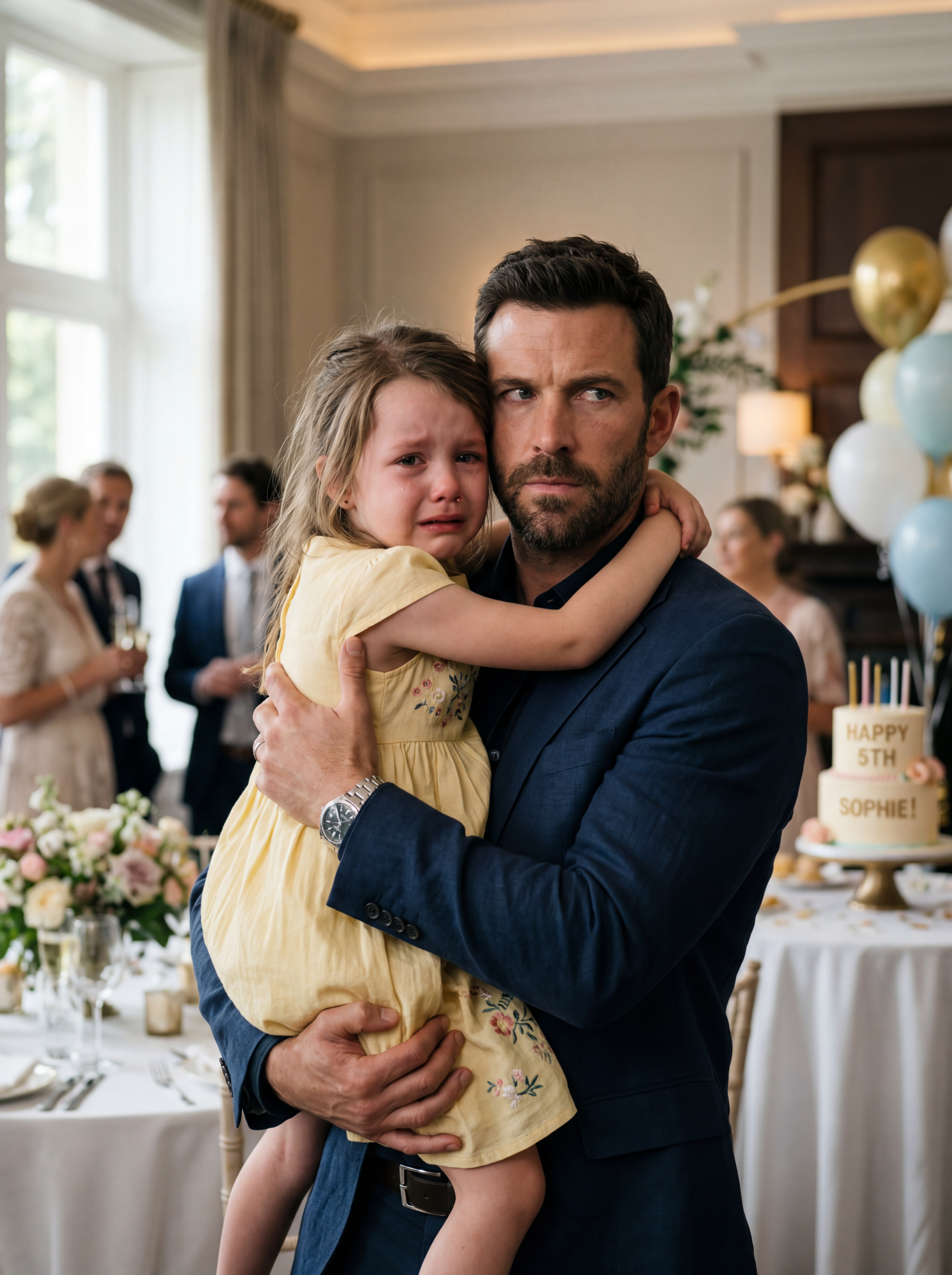
The Morning They Begged for the Wrong Person
By the time the medical staff had finished documenting what they saw and asking me questions I answered with careful honesty, the sky outside was turning pale, and exhaustion settled into my bones like a weight. Lily sat wrapped in a blanket, leaning into my side, and I kept one hand on her back as if touch itself could reassure her that she was no longer trapped in a bathroom corner.
The next morning, I woke to pounding at my front door, sharp and frantic, and when I opened it my mother was on my porch with her makeup smeared and her expression designed to trigger guilt rather than responsibility. She dropped to her knees like she was performing for an invisible audience, clinging to my pant leg as though I were the one threatening the family’s survival.
“Please,” she sobbed, voice trembling. “Please give your sister a way out of this. Don’t destroy her life.”
I stared at her, stunned by how quickly her instincts had chosen their target, because she was not asking how Lily was feeling, and she was not asking what Lily needed, and she was not even asking what had actually happened. The tragedy, to my mother, was not my child’s fear, but the consequences my sister might face.
I kept my voice flat, because if I let emotion steer, she would use it as proof that I was irrational.
“Get off my property,” I said calmly. “If you refuse, I will call the police and file everything I have.”
My mother’s face twisted as if I had struck her.
“She didn’t mean it,” she insisted quickly. “You know how she is. She had a few drinks, and she went too far, but you can’t do this to her, you can’t take her son’s mother away from him, you can’t ruin her job, you can’t make our family look like—”
She kept listing losses that belonged to my sister, as though my child’s experience was a minor inconvenience, and I felt something inside me settle into a hard, quiet decision. I realized that my mother’s loyalty had never been about right and wrong, it had been about preserving the family’s image and protecting the people who caused the most chaos, because those were the people she feared.
I interrupted her before she could build momentum.
“You’re begging for the wrong person,” I said, voice steady. “If you want to help someone, you can start by admitting what happened and staying away from my daughter.”
She looked up at me, anger replacing tears so quickly it was almost impressive.
“You’re heartless,” she hissed. “She’s your sister.”
I nodded once, feeling no pleasure in it, only clarity.
“And Lily is my child,” I replied. “That’s not a debate.”
I closed the door, not dramatically, but firmly, and I stood with my back against it for a moment, breathing slowly as if I had just walked out of a long tunnel and into air that finally belonged to me.

Evidence, Messages, and the Price of Telling the Truth
People love to say they would do anything for their children, but you only find out what that sentence costs when the enemy isn’t a stranger, because strangers are easy to label, while relatives come wrapped in years of holidays and shared history that other people use to shame you into silence. I used to believe blood was automatically a bond, something sacred enough to excuse small cruelties, yet that belief began crumbling the moment I saw my daughter hiding behind a toilet like the world had taught her there was no safe adult nearby.
Lily’s mother had not been in our lives for a long time, and I avoided using language that would turn her absence into a spectacle, yet it meant Lily and I had become our own small unit, and I had promised myself that whatever I couldn’t control in the world, I would control the safety of our home. I had been raised to keep family problems quiet, to smile through discomfort, to accept cruel jokes as personality traits, and to forgive quickly so nobody had to face the ugliness underneath.
The police took statements, and the clinicians documented what they observed, and I kept every record because I understood that my family would rewrite the story the moment they had the chance. They did not disappoint.
My father left voicemails that moved from accusation to intimidation, talking about “family honor” and warning me that I would regret making things public, as if the only shame belonged to me for refusing to hide it. My mother texted repeatedly, not asking about Lily’s nightmares or her fear of bathrooms, but reminding me to “think about the impact on your nephew,” which was just another way of saying my sister’s comfort mattered more than my daughter’s healing.
I did not respond to those messages, except to tell them, once, in plain words, that they were not permitted near my child.
When the case moved forward, my sister continued insisting she had been “teaching discipline,” and she said it with the kind of confidence that happens when someone has always been protected from consequences. The evidence, however, didn’t care about family stories, because documentation is indifferent to denial, and the courtroom is one of the few places where manipulative charm doesn’t always win.
In court, I sat with Lily’s advocate and the prosecutor’s team, listening as details were presented in careful, clinical language that avoided spectacle, because the goal was truth rather than performance. My sister’s attorney tried to shift attention onto my reaction at the party, suggesting I had caused the chaos by leaving, as though walking out with my injured child were the same as creating harm, yet the judge’s expression grew colder with every excuse.
When my mother testified, she described my sister as a loving parent who had simply been “misunderstood,” and she painted me as dramatic and unforgiving, as if protecting my daughter were a personality flaw rather than a responsibility. My father sat behind her, arms crossed, looking offended that anyone had questioned the family, and I remember thinking that their outrage had always been reserved for exposure, never for the pain that exposure revealed.
The verdict came with a weight that made the room feel suddenly still, and my sister’s posture collapsed when she realized her confidence no longer mattered.
Afterward, in the courthouse hallway, my mother cornered me with a familiar fury, eyes bright and sharp.
“I hope you’re satisfied,” she said, voice trembling. “You ruined your sister’s life, and her child will grow up without her because of you.”
I looked at her for a long moment, hearing the same logic she had used my entire childhood, which was that consequences were cruelty, and that protecting abusers was love.
“Lily will grow up remembering fear that no child should carry,” I said quietly. “She wakes up startled, she flinches at sudden movement, and she needs time and support to feel safe again, but sure, let’s keep focusing on how inconvenient consequences are for the person who caused it.”
My mother’s face tightened.
“You’re not my son anymore,” she snapped, as if that were the deepest punishment she could offer.
I nodded slowly, surprising myself with how calm I felt.
“That’s the first thing we’ve agreed on in years,” I replied, then walked away without turning back.
The Family We Built After the Cut
Healing is not a straight line, and it is not a dramatic montage, and it does not happen because someone wins an argument, because what Lily needed was not my anger, but my consistency, my patience, and my willingness to make the world predictable again. We started therapy with a specialist who worked gently, focusing on safety routines and helping Lily name her feelings without being overwhelmed by them, and I learned how to support her without pushing her to “be brave” in ways that made her feel alone.
Over time, the nightmares softened, and the flinching became less frequent, and Lily began to laugh again in the way she used to, not because she forgot, but because she finally felt protected. The people who stepped into our lives were not blood relatives, and they did not demand loyalty, but they showed up with meals, offered to sit with Lily when I had appointments, and treated her like a person rather than a problem, and in a quiet way they became the aunties and uncles she deserved.
I stopped chasing my old family for understanding, because I realized they had chosen their side long before the party ever happened, and they were not going to transform simply because I wished they would. I changed my locks, updated school pickup lists, and set boundaries that did not require their agreement to be valid, because boundaries are not negotiations, they are safety measures.
Some evenings, after Lily fell asleep, I would sit in the quiet kitchen and feel grief for the family I thought I had, yet even that grief eventually became lighter when I recognized the truth I had avoided for years: cutting ties with people who protect harm is not betrayal, it is protection, and protection is what a parent owes a child more than anyone else.
Lily and I built a life that felt smaller in number but stronger in honesty, and the absence of constant guilt was its own kind of peace.