“Son… When I Can’t Pay You Anymore, Don’t Stop Coming.” — I Promised an Elderly Woman I’d Keep Helping Her Anyway, But the Day She Passed Away, Her Children Arrived and Discovered What She Left Me
The first time Mrs. Harriet Langston asked him not to stop coming even if she could no longer afford to pay him, the late afternoon sunlight was falling through the thin lace curtains of her small living room in Springfield, Missouri, painting the walls in soft gold while the old clock above the fireplace ticked loudly enough to fill the quiet between them.
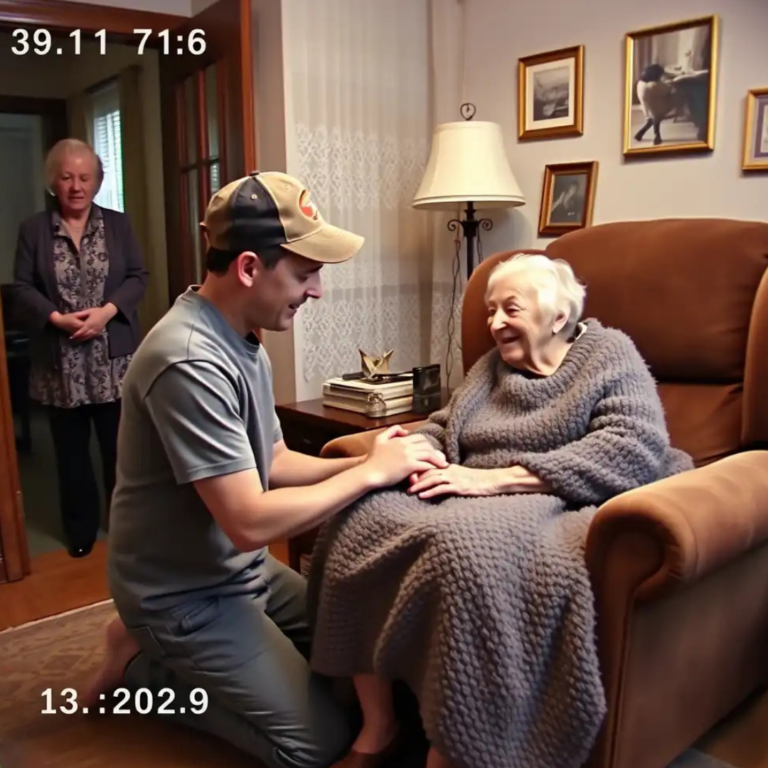
“Son… when I can’t pay you anymore, don’t stop coming just yet.”
Her voice sounded so fragile that Nathan Brooks had to lean closer to the worn recliner where she sat wrapped in a faded blue blanket, her thin fingers gripping the armrest as if the strength of her body had slowly been replaced by the stubbornness of her will.
Nathan tried to laugh the moment away, the way people do when they sense something uncomfortable hovering beneath ordinary conversation.
“Mrs. Langston,” he said gently, adjusting the kettle on the stove behind him, “you’re going to be just fine. Let’s worry about your health first.”
But she reached forward and caught his wrist with surprising firmness, her pale eyes searching his face as if she were trying to memorize it.
“Promise me.”
The request felt heavier than the words themselves.
Nathan didn’t understand why, but something in the way she said it made the air feel different.
So he nodded.
“I promise.”
That simple promise quietly rearranged the course of his life in ways neither of them could have predicted.
Nathan had first met Mrs. Langston three months earlier through a flyer pinned crookedly on a bulletin board at the community college where he worked part-time as a janitor while studying accounting at night. The handwritten note asked for “light house help, groceries, and rides to the clinic,” offering fifty dollars per visit.
At the time Nathan needed every dollar he could find.
He had grown up in foster homes, aged out of the system at eighteen, and spent the next several years working whatever jobs he could while slowly inching his way through school. Life had never offered him comfort, but it had taught him endurance.
The first day he knocked on Mrs. Langston’s door, he expected a quick cleaning job and an elderly woman who would watch him suspiciously from across the room.
Instead he found a quiet house filled with old photographs and the gentle scent of lavender soap, and a white-haired woman who greeted him with the same polite warmth she might have offered a lifelong friend.
“Come in, Nathan,” she said after he introduced himself. “The kitchen sink has been leaking for two days and I’ve been pretending not to notice.”
He fixed the pipe in twenty minutes.
But he stayed for nearly two hours.
Because once the chores were finished, Mrs. Langston insisted he sit down and drink tea with her while she talked about the neighborhood as it used to be decades earlier when children played baseball in the street and her late husband Walter spent weekends repairing bicycles for the kids who couldn’t afford new ones.
At first Nathan thought she was simply lonely.
Over time he realized something deeper was happening.
Mrs. Langston had three adult children living in different states, all successful by the standards most people admired—one owned a car dealership in Texas, another worked in finance in Chicago, and her daughter ran a real estate agency in Arizona.
Yet in all the months Nathan visited, none of them ever appeared.
Not once.
Their absence lingered in the house like a quiet truth no one wanted to name.
At the beginning Mrs. Langston paid him faithfully, sliding folded bills across the kitchen table with an apologetic smile.
But as the weeks passed, the payments grew irregular.
Some visits ended with a vague promise that she would “settle up next time.”
Other days she seemed to forget completely.
Nathan noticed the pattern, but he said nothing.
Until one rainy afternoon when he found her sitting silently at the table, staring at an unopened envelope from the electric company.
He placed a bowl of chicken soup in front of her and spoke carefully.
“You don’t need to worry about paying me right now. Whenever things are easier is fine.”
She looked up slowly.
The sadness in her eyes felt older than the house itself.
“You always talk like there’s still a later,” she murmured.
Nathan didn’t know what to say.
So he simply kept showing up.
He fixed the loose step on the porch.
He picked up her prescriptions from the pharmacy.
He brought fresh apples when he had extra cash.
And sometimes, after finishing the chores, he sat quietly in the living room while she told stories about her son Patrick, who had once been the most stubborn boy in Missouri but grew into a gentle man who worked nights to pay his way through college.
One evening while searching for a screwdriver in the bedroom, Nathan accidentally discovered a stack of old envelopes in a dresser drawer.
Each one bore the same address.
Each one had been stamped Return to Sender.
They were letters Mrs. Langston had written to her children.
None had been answered.
Nathan slid the drawer closed without mentioning it.
But that night, as he was leaving, she called after him.
“Nathan… could you come tomorrow too?”
Her health began to decline rapidly after that.
Walking across the living room left her breathless.
Holding a cup of tea required both hands.
A doctor from the local clinic spoke quietly to Nathan in the hallway one morning.
“She’s very weak,” the doctor said. “You should prepare yourself.”
Nathan drove her home in silence.
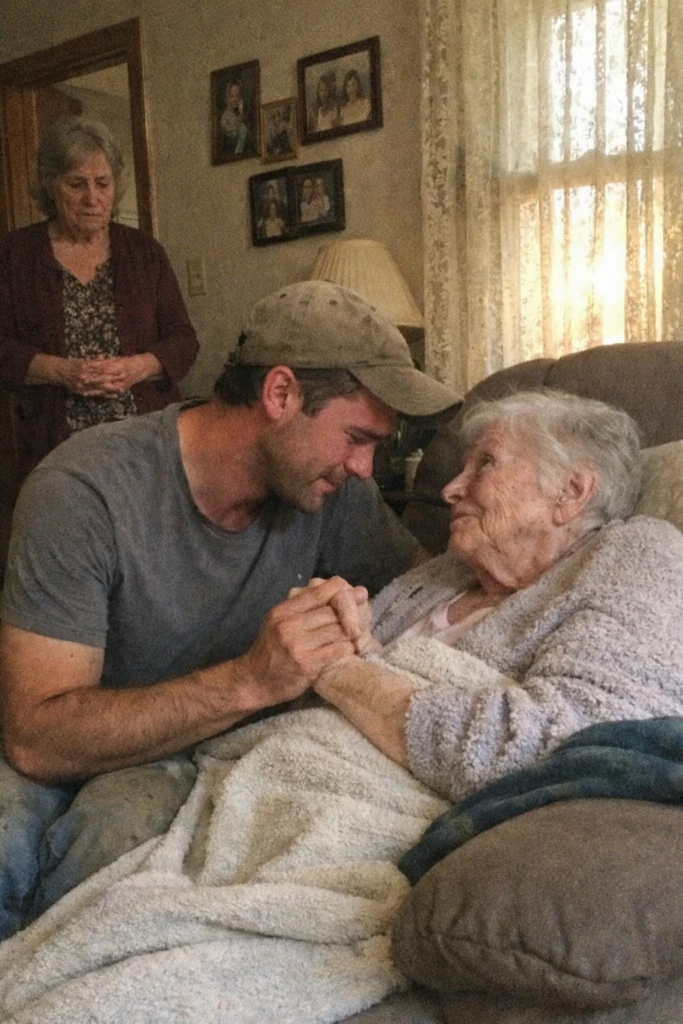
As they pulled into the driveway, Mrs. Langston stared at the house with an expression that made his chest tighten.
“Don’t let them throw everything away,” she whispered. “Not before you look in the bedroom closet.”
“Please don’t talk like that,” Nathan replied.
“Promise me.”
He promised again.
The final weeks were painfully slow.
Nathan visited almost every day.
He helped her eat.
He read the newspaper aloud so the outside world would still feel close.
He adjusted the blankets when she shivered during the night.
One evening, while he was washing dishes, she called him into the bedroom with unexpected urgency.
Her hand gripped his wrist again.
“Forgive me,” she whispered.
“For what?”
“For not paying you.”
Nathan felt something inside him break open.
“You don’t owe me anything.”
Her lips trembled with a faint smile.
“Yes, I do. But it won’t be money you remember.”
Two days later Nathan arrived to find the neighbor Mrs. Cole standing on the porch with tears streaming down her face.
“She passed early this morning, honey.”
The house felt hollow without her presence.
Her radio still sat beside the window.
Her cane leaned against the wall.
But the quiet was different now.
Mrs. Cole handed Nathan a yellow envelope.
“She told me to give you this.”
Inside was a letter and a small brass key.
In the letter Mrs. Langston wrote about Patrick—the son who had died young after a sudden illness. She explained how she had used the money he saved for college to pay medical bills, promising herself she would replace it someday.
She never did.
When Nathan began visiting, she wrote, every small act of kindness reminded her of the son she had lost.
Behind a false panel in the bedroom closet was a metal box containing some savings.
And the deed to the house.
She had left everything to Nathan.
Not because he cleaned the kitchen.
Not because he fixed the roof.
But because he had given her something her own children had forgotten.
Dignity.
Nathan’s hands shook as he folded the letter.
The next afternoon Mrs. Langston’s children arrived.
Three well-dressed strangers stepped into the house like investors inspecting property.
The oldest son glanced at Nathan suspiciously.
“Who are you?”
“Nathan,” he said quietly. “I helped take care of her.”
They barely acknowledged the words.
Instead they began discussing selling the house, arguing about estate costs and legal paperwork as if their mother had been nothing more than a complicated financial file.
Nathan listened silently until the moment felt unbearable.
Then he placed the deed on the table.
Their reaction was immediate.
The daughter turned pale.
“This has to be forged.”
Before Nathan could answer, Mrs. Cole appeared in the doorway.
“The only person who showed up for your mother was that young man,” she said firmly.
The room fell silent.
Within weeks the legal documents were confirmed.
The house truly belonged to Nathan.
The children tried to contest the will, but neighbors testified about the months Nathan had spent caring for Mrs. Langston while her family remained absent.
The case collapsed quickly.
Two years later the small house looked completely different.
Nathan had repaired the roof, repainted the porch, and planted flowers along the walkway.
He graduated from college that spring.
On the evening he returned home with his diploma tucked carefully inside his backpack, he stopped at the grocery store and bought the ingredients for chicken soup.
The same recipe Mrs. Langston loved.
As the pot simmered on the stove, the kitchen filled with the familiar smell of warm broth and herbs.
Without thinking, Nathan placed two bowls on the table.
One for himself.
One for the empty chair.
He sat down slowly and looked around the quiet room.
“I finished school,” he said softly. “You were right. Things did get better.”
The clock above the fireplace ticked gently.
Outside, the neighborhood children laughed as they rode bicycles down the street.
Nathan lifted the spoon and tasted the soup.
For the first time since her passing, the house no longer felt lonely.
Because sometimes the family that changes your life isn’t the one you’re born into.
Sometimes it’s the one that finds you quietly, unexpectedly, and leaves behind a kindness strong enough to build an entire future upon.