A Final Farewell to Robert Kelker-Kelly? Why Days of Our Lives Fans Are Calling for a Special Tribute to the Former Bo Brady
🚨 THE WORLD OF SALEM IS MOURNING AN ACTOR WHO HELPED SHAPE ONE OF ITS MOST MEMORABLE ERAS. ROBERT KELKER-KELLY, WHO ACCEPTED THE DAUNTING CHALLENGE OF REPLACING AN ICONIC BO BRADY, FOUND HIMSELF AT THE CENTER OF THE EXPLOSIVE HOPE-AND-BILLIE LOVE TRIANGLE, AND LEFT HIS OWN MARK ON THE BRADY FAMILY SAGA, HAS PASSED AWAY AT ONLY 62. 💔
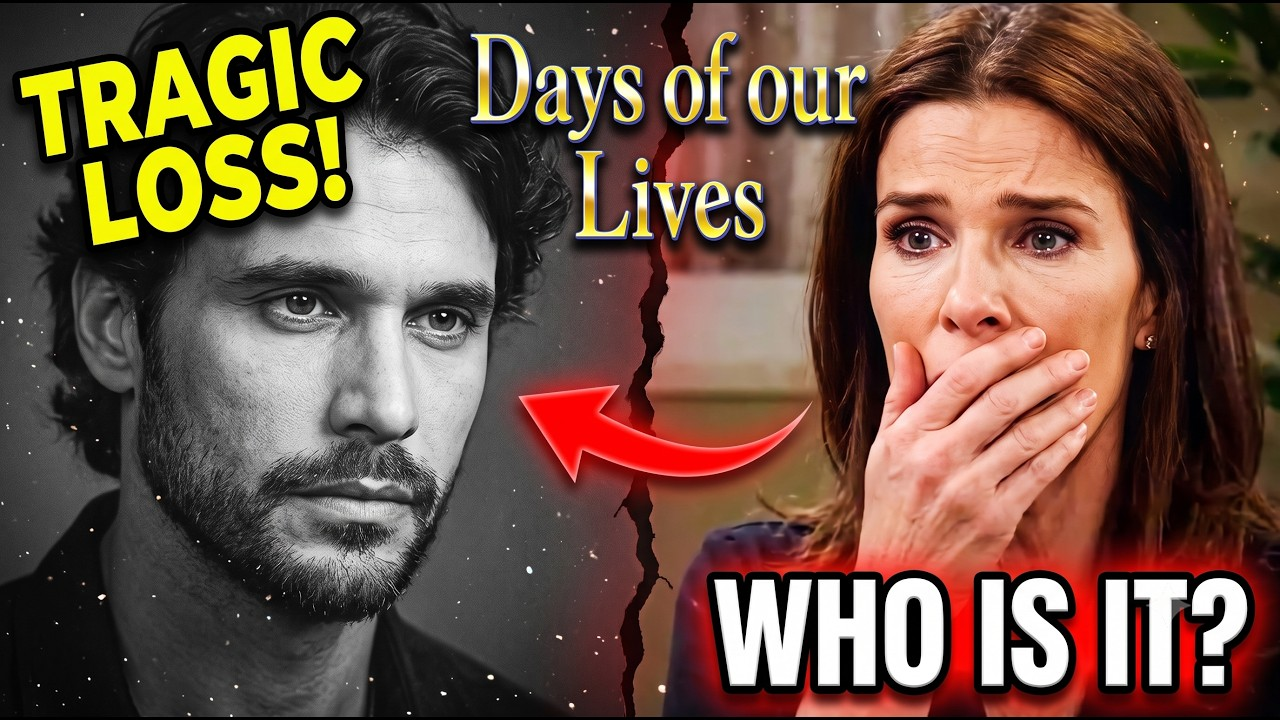
To generations of Days of Our Lives viewers, Bo Brady represents far more than another familiar character on a daytime drama.
Motorcycles roaring down the road.
The unmistakable leather jacket.
A detective’s badge.
A rebellious spirit.
Hope Williams.
The legendary Brady family.
And a lifetime of passionate relationships, deadly threats, astonishing reunions, and seemingly impossible second chances.
Peter Reckell first brought Bo to life, creating a connection between actor and character that became nearly impossible to separate.
And that was precisely why Robert Kelker-Kelly faced such an extraordinary challenge.
Consider what he was being asked to accomplish.
Step into the shoes of one of daytime television’s most cherished romantic heroes.
Avoid becoming a mere imitation of the performer audiences had already embraced.
Preserve a beloved love story that fans had followed for countless years.
And somehow, against all expectations?
Persuade those same viewers that he belonged in the role.
Kelker-Kelly managed to accomplish exactly that.
Following his death on October 3, 2026, at the age of 62, longtime fans have begun looking back at a remarkable chapter in Salem’s history, a period defined by heated disagreements, unforgettable passion, and one of the most talked-about romantic triangles of the 1990s.
Authorities in Missouri confirmed his passing. Early reports indicated that the circumstances appeared related to a medical emergency, although an official, specific cause of death had not been publicly disclosed.
Key Takeaways
- Robert Kelker-Kelly passed away on October 3, 2026, at the age of 62.
- Missouri authorities indicated that his death appeared connected to a medical situation, but no definitive official cause had been publicly confirmed in the initial reports.
- His daytime television career began in 1987 when he portrayed Sam Fowler on Another World.
- In 1992, Kelker-Kelly inherited the legendary role of Bo Brady on Days of Our Lives, following Peter Reckell’s departure.
- He remained in the role through 1995, when Reckell returned to portray Bo once again.
- During his time in Salem, Kelker-Kelly worked closely with Kristian Alfonso as Hope Brady and Lisa Rinna as Billie Reed.
- His interpretation of Bo introduced a more restrained, intense, and occasionally darker personality than audiences had previously experienced.
- His performance earned him a Soap Opera Digest Award for Outstanding Lead Actor in 1994.
- The following year, Kelker-Kelly and Lisa Rinna received the magazine’s Hottest Couple recognition for their portrayal of Bo and Billie.
- In her 2026 memoir, Rinna alleged that her working relationship with Kelker-Kelly involved emotional difficulties, unpredictable behavior, and troubling personal interactions.
- Kelker-Kelly never issued a public response to those allegations before his passing.
- Regardless of the reported tensions behind the cameras, Bo and Billie’s relationship became an essential element of the show’s 1990s storylines.
- Following his departure from Days, Kelker-Kelly portrayed Stavros Cassadine on General Hospital before eventually choosing a career outside acting.
- He subsequently worked in aviation as a professional pilot and flight instructor.
- His passing has prompted an important question among longtime fans: will Days of Our Lives recognize the actor who kept Bo Brady’s story alive during one of the character’s most complicated periods?
Few assignments in television are as unforgiving as replacing an established soap opera legend.
When a film franchise changes its leading actor, audiences encounter the replacement in a single production.
They spend a couple of hours watching.
Some accept the change.
Others reject it.
But daytime dramas operate according to completely different rules.
Viewers welcome familiar fictional personalities into their living rooms nearly every weekday.
Year after year.
Sometimes across entire generations.
Eventually, an actor’s appearance becomes inseparable from the person they portray.
A distinctive voice becomes a comforting part of daily life.
The relationship between two performers becomes woven into the audience’s emotional history.
And then, without warning?
A different face appears.
But the character’s name remains unchanged.
That was the situation Robert Kelker-Kelly encountered in 1992.
By then, Peter Reckell had already established Bo Brady as one of Salem’s most recognizable and beloved leading men.
Bo and Hope weren’t simply another fictional romance.
They had become an institution.
A grand adventure.
A story of youthful devotion.
A celebration of rebellion and freedom.
The kind of romantic saga that encouraged devoted viewers to arrange their afternoons around the next episode.
Then Reckell departed.
Yet the writers of Days of Our Lives had no intention of ending Bo’s journey.
Which meant another actor needed to take over.
Kelker-Kelly accepted that challenge.
And rather than attempting to duplicate everything Reckell had created?
He approached the character from a different direction.
His portrayal often seemed tougher.
More emotionally guarded.
At times, considerably more troubled.
His eyes suggested buried frustration and unresolved conflict.
There was a sharper quality to his personality.
Audiences were still watching Bo Brady.
But they weren’t watching someone desperately trying to recreate Peter Reckell’s performance.
They were experiencing Robert Kelker-Kelly’s interpretation of Bo.
That difference may have been the key to making the recast work.
Because simply copying his predecessor would almost certainly have disappointed viewers.
Dedicated soap fans recognize an imitation almost immediately.
Instead, Kelker-Kelly introduced a character interpretation that encouraged endless debate.
And throughout soap opera history, controversy has often helped keep characters fascinating.
Then Billie Reed entered the picture.
Lisa Rinna.
Immediate attraction.
Explosive emotions.
Endless complications.
Everything required for memorable daytime drama.
Bo’s romance with Billie allowed Kelker-Kelly to establish something that belonged specifically to his period in the role.
A relationship with its own identity.
A distinctive romantic connection.
A story that could stand apart from what audiences had already witnessed.
And Rinna’s portrayal of Billie provided exactly the right combination of qualities.
She was fashionable.
Emotionally exposed.
Determined.
And far from simple.
One moment, Bo might be trying to protect her.
The next, her decisions could leave him completely frustrated.
Their connection was compelling precisely because it rarely seemed comfortable.
There was always an element of danger.
And that uncertainty made their scenes difficult to ignore.
Their partnership eventually became such a defining feature of the series that Soap Opera Digest recognized Kelker-Kelly and Rinna as its Hottest Couple in 1995.
Kelker-Kelly had already received the magazine’s Outstanding Lead Actor honor in 1994.
But there was one problem that no new romance could erase.
Hope Brady.
Even when Hope wasn’t physically present in Salem?
Her influence remained impossible to overlook.
That is the challenge of entering a story built around one of daytime television’s most celebrated supercouples.
Bo could develop genuine feelings for Billie.
Fans could become deeply invested in their relationship.
But Hope Williams Brady represented years of unforgettable shared history.
And when Hope eventually returned to the storyline, everything became more complicated.
Bo.
Hope.
Billie.
Three people trapped inside an emotional conflict without an easy solution.
And it was during that period that Kelker-Kelly’s portrayal became particularly intriguing.
His scenes with Kristian Alfonso didn’t need to reproduce the exact romantic chemistry she had previously shared with Peter Reckell.
Instead, their interactions introduced another emotional dimension.
The characters were familiar.
But the atmosphere had changed.
Bo found himself divided between the life he had created in the present and the extraordinary love story still connected to his past.
For viewers supporting Billie?
Hope’s return threatened to destroy everything.
For loyal Bo-and-Hope supporters?
Billie had become an obstacle between two people they believed belonged together.
And for the performers themselves?
Every conversation carried the weight of years of established fan expectations.
Maintaining that kind of emotional intensity is no small task.
Yet Kelker-Kelly sustained it throughout his three-year run.
Episode after episode.
Page after page of dialogue.
Heartbreaking confrontations.
Romantic moments.
Investigations and police cases.
Family conflicts.
All unfolding within the demanding production environment that daytime television actors have described for generations.
There was little opportunity to spend weeks refining a handful of scenes.
Frequently, the process was much faster.
Memorize the dialogue.
Rehearse the movements.
Perform in front of the cameras.
Then immediately prepare for the next scene.
That relentless rhythm is one reason long-running daytime performances deserve recognition.
Kelker-Kelly wasn’t simply making occasional appearances as Bo Brady.
He was required to establish himself as Bo while working at an extraordinary pace, knowing that countless viewers were comparing him with Peter Reckell almost every day.
And he made it through.
That achievement alone secures his place in the show’s history.
However, in 2026, renewed attention brought a far more difficult dimension to the discussion of his time in Salem.
Lisa Rinna revisited their professional relationship in her memoir, You Better Believe I’m Gonna Talk About It.
In the book, she alleged that Kelker-Kelly behaved unpredictably, spoke to her harshly, and subjected her to emotionally manipulative interactions during their years working together.
She described the experience as deeply distressing, despite the convincing romantic connection their characters displayed on television.
Kelker-Kelly did not publicly address the accusations before his death, while representatives associated with Days of Our Lives declined to comment when the allegations attracted renewed publicity.
That distinction is essential.
These were allegations made by Rinna.
They represent her description of what happened.
They should be presented accurately as her account rather than treated as independently established facts simply because Kelker-Kelly is no longer alive to offer his perspective.
Nevertheless, the contrast is difficult to overlook.
What audiences witnessed on television?
Romance.
Intense attraction.
A relationship compelling enough to earn major soap opera recognition.
What Rinna later described happening away from the cameras?
A professional experience she remembers in a completely different light.
And that contrast illustrates an uncomfortable reality of the entertainment industry.
The intimacy audiences believe they are witnessing may have little connection to the actual relationship between the performers once filming ends.
Two actors can convincingly portray passionate love without sharing affection in real life.
They can deliver scenes filled with tenderness while experiencing considerable personal pressure.
They can create extraordinary romantic tension through experience and professional skill rather than genuine closeness.
Convincing viewers is part of the profession.
And whatever happened outside the fictional world, Kelker-Kelly and Rinna delivered performances that persuaded audiences.
Regardless of how fans interpret the later allegations?
The Bo-and-Billie romance remains an established part of Days of Our Lives history.
Those scenes cannot simply be erased.
Nor can their significance be separated from the character’s development during that period.
Which inevitably brings the conversation back to Peter Reckell.
Because eventually?
The original actor returned.
In 1995, Kelker-Kelly’s time portraying Bo came to an end.
Reckell stepped back into the role.
The face most viewers associated with Bo was once again on their screens.
For many longtime fans, Salem finally felt familiar again.
Bo and Hope’s legendary romance resumed with the actors audiences had always most strongly connected to that relationship.
Looking back now, some might be tempted to dismiss the Kelker-Kelly era as an unusual interruption between Reckell’s appearances.
But that interpretation overlooks something important.
Soap opera history isn’t composed exclusively of the versions viewers remember most affectionately.
It also includes every performer and storyline that helped carry a character from one period to another.
Kelker-Kelly kept Bo active while Reckell was away.
Important romances unfolded.
Relationships evolved.
Billie became central to the story.
Hope’s presence reshaped everything.
Awards recognized the performances.
Fans debated every major development.
Viewers planned their days around the next episode.
Those three years were meaningful.
And following Kelker-Kelly’s death?
They carry an entirely different emotional significance.
Because the man behind that interpretation is no longer here.
There will be no future interview in which he looks back on his years as Bo with the perspective of old age.
No possibility of hearing him revisit the pressure of replacing Reckell during a nostalgic anniversary special.
No unexpected return to Salem as an entirely new character.
No surprise appearance at a fan convention where audiences can question him about Billie, Hope, or the extraordinary demands of making daytime television in the 1990s.
Those possibilities have disappeared.
And the story of Kelker-Kelly’s life after soap operas is almost as intriguing as his acting career.
Because he accomplished something many performers struggle to do.
He genuinely moved on.
Not in the sense of announcing a temporary absence.
Not by explaining that he was waiting for another promising screenplay.
He developed an entirely separate career.
Aviation.
After leaving the entertainment business, Kelker-Kelly became a professional pilot and flight instructor.
The transformation almost sounds like the plot of a movie.
One career revolved around emotional expression.
The next depended on accuracy and discipline.
In soap operas?
Chaos drives the entertainment.
Secret relatives.
Abductions.
Supernatural possessions.
Terrifying explosions.
Characters returning from the dead.
Impossible romantic entanglements.
But in aviation?
Disorder is something to prevent.
Safety procedures are essential.
Weather conditions must be understood.
Technical rules cannot be ignored.
Maintaining control is fundamental.
Kelker-Kelly transitioned from portraying characters surrounded by the constant upheaval of fictional Salem to working in a profession where careful preparation can make all the difference.
Perhaps that new path helps explain why he eventually became so distant from Hollywood.
He had constructed another existence.
Developed a different expertise.
Found an identity that extended well beyond Bo Brady or Stavros Cassadine.
Yet for devoted television audiences?
An actor’s decision to move forward doesn’t necessarily diminish the connection viewers feel.
Performers begin new chapters.
Their fans often continue revisiting the old ones.
Even now, somewhere, someone may be replaying a romantic scene between Bo and Billie.
Another longtime viewer may remember the frustration of watching Bo pursue Billie instead of Hope.
Someone else may consider Kelker-Kelly their favorite Bo because his episodes were the first they ever experienced.
That is the extraordinary nature of daytime television memories.
Everything depends on when a viewer discovered the story.
For one generation?
Bo Brady will forever mean Peter Reckell.
But for a particular group who fell in love with the series during the early 1990s?
Robert Kelker-Kelly remains inseparable from the character.
The same fictional hero.
But a different childhood.
Another afternoon spent watching television.
A different recording on an old VHS cassette.
Another family living room.
And that is what makes the possibility of an on-screen tribute so meaningful.
Should Days of Our Lives officially recognize Robert Kelker-Kelly’s contribution?
Not by suggesting that his interpretation somehow surpassed Reckell’s.
That isn’t necessary.
And certainly not by altering the established history of the show.
There is no reason to do that.
A simple gesture might carry far more emotional weight.
A dedication at the end of an episode.
A carefully chosen photograph.
A brief message reading, “In Loving Memory.”
Perhaps a quiet moment in which Billie reflects on something from her past.
Or Hope recalls an old memory with a bittersweet smile.
There would be no need to confuse the fictional character with the actor who once portrayed him.
Only a respectful acknowledgment.
For three years, one performer carried the identity of one of Salem’s most recognizable leading men.
That contribution deserves to be remembered.
And perhaps soap operas are uniquely suited to expressing that kind of remembrance.
After all, few television genres understand the concept of continuity as thoroughly as daytime drama.
People grow older.
Performers come and go.
Romantic relationships evolve.
Familiar appearances change.
And despite everything?
The story finds a way to continue.
Bo Brady demonstrates that perfectly.
Peter Reckell introduced him to viewers.
Robert Kelker-Kelly kept his journey moving forward.
Reckell eventually returned.
Years became decades.
Bo and Hope’s romance continued growing into television legend.
None of those developments needs to diminish the importance of another.
Together, they form a complete history.
That is what makes long-running daytime television special.
Kelker-Kelly’s passing also serves as a painful reminder that real life rarely provides the kind of satisfying conclusions audiences expect from fictional stories.
His final years weren’t marked by a glorious television comeback or an emotional return to Salem.
Instead, much of the renewed attention surrounding his name earlier in 2026 emerged after the publication of Rinna’s memoir and its allegations concerning their relationship behind the scenes.
He never publicly offered his response before his death.
Consequently, certain questions remain unanswered.
And those questions may never receive definitive answers.
That is precisely why thoughtful remembrance matters.
Honoring a performer’s contribution does not require pretending that controversy never existed.
But acknowledging allegations also doesn’t mean an entire career should be defined solely by accusations made many years after the events in question.
There is room to recognize both realities.
Rinna has spoken about experiences she found painful.
Kelker-Kelly left no public response to those specific claims.
And the performances he gave as Bo Brady remain part of television history.
Human legacies are rarely completely straightforward.
The fictional world of soap opera is certainly no exception.
In a strange way?
That complexity seems particularly fitting for someone who spent years portraying a central figure in Salem.
Bo Brady himself was never a flawless hero.
He sometimes deceived others.
Made serious errors in judgment.
Caused pain to people who loved him.
But he also loved with extraordinary intensity.
He fought for those he cared about.
Frequently rushed toward danger.
And rarely allowed rules to dictate every decision.
Soap opera heroes don’t remain memorable because they never make mistakes.
They endure because their lives are filled with conflict, passion, and dramatic consequences.
Kelker-Kelly knew how to portray those qualities.
And later, on General Hospital, he demonstrated an entirely different side of his abilities.
He moved away from the familiar image of a troubled romantic hero to portray Stavros Cassadine.
Calculating.
Threatening.
Aristocratic.
Consumed by an enormous sense of entitlement.
A character almost completely opposite to Bo Brady.
His performances on General Hospital, including appearances in 2013 and 2014, showed just how convincingly he could transform his screen presence.
But for the audience that remembers his years on Days of Our Lives?
The strongest images remain familiar.
The leather jacket.
That intense expression.
Billie Reed.
Hope Brady.
And the extraordinary challenge he accepted in 1992.
Imagine what his first day on set must have felt like.
The production crew already knew Peter Reckell.
The audience adored Peter Reckell.
Kristian Alfonso understood the emotional history of Bo and Hope.
Everyone involved knew that comparisons were inevitable.
And despite all of that pressure, Kelker-Kelly stepped in front of the cameras.
Filming began.
And for the next three years, he was Bo Brady.
Perhaps that is the moment worth remembering most.
Not because he eventually became the definitive interpretation of the character.
For a large portion of the audience, that distinction still belongs to Reckell.
But because Kelker-Kelly achieved something remarkably difficult in its own right.
He entered a role so closely associated with another performer that rejection seemed almost inevitable.
The memories of Reckell’s version were still fresh.
Audience expectations were enormous.
Yet enough viewers accepted Kelker-Kelly’s portrayal to remain invested in the story.
For three full years.
That shouldn’t be dismissed.
It was an important chapter.
A chapter that generated controversy.
A chapter filled with romance.
A chapter that occasionally frustrated even the most dedicated viewers.
But undeniably a chapter in Salem’s history.
And now that Kelker-Kelly has passed away?
Many fans are rediscovering those years.
Old footage is attracting renewed attention.
Romantic ceremonies.
Emotional confrontations.
Billie’s unforgettable moments.
Hope’s dramatic returns.
And the unmistakable atmosphere of early-1990s daytime television.
Voluminous hairstyles.
Leather clothing.
Oversized shoulder pads.
Powerful background music.
And those extended, meaningful glances just before an episode disappeared into a commercial break.
It was an era when millions of Americans arranged their daily routines around soap opera broadcasts because watching an episode later wasn’t nearly as easy as it is today.
Miss the Tuesday installment?
There was a real chance you had missed it for good.
Kelker-Kelly was part of that television culture.
He contributed to memories that audiences continue carrying decades later.
And that is one reason his death at 62 feels so sudden and difficult to absorb.
Not because the authorities have publicly established an exact medical cause.
According to the initial information, they had not.
Reports indicated that emergency personnel responded to his Missouri residence after he became unresponsive.
Officials reportedly regarded the circumstances as consistent with a medical event and did not identify suspicious circumstances.
However, the precise official cause of death had not been disclosed in the reports available at the time.
That uncertainty should not be exaggerated into an invented mystery.
There is no justification for unsupported conspiracy theories.
No reason to manufacture a medical diagnosis.
The reality of his passing is already heartbreaking enough.
A man whose face once appeared in countless living rooms every afternoon has died.
An actor who accepted one of the most difficult recasting assignments in soap opera history is gone.
A performer capable of portraying both the passionate Bo Brady and the sinister Stavros Cassadine has left us.
A professional pilot who discovered an entirely new life after Hollywood is no longer here.
Yet television offers an unusual form of permanence.
Start an old episode.
And suddenly, he appears again.
Bo enters the room.
Billie turns toward him.
Hope watches from nearby.
The familiar romantic conflict begins once more.
The characters have no idea what the next twenty or thirty years will bring.
Neither did the performers when those scenes were filmed.
For a brief moment?
The world of 1994 is alive again.
And perhaps that is the most meaningful way audiences can honor Robert Kelker-Kelly.
Remember his performances.
Recognize the complicated elements of his story.
Avoid pretending to know things that have never been established.
And allow the work he left behind to speak for itself.
Because regardless of how viewers reacted when Kelker-Kelly first replaced Peter Reckell…
Regardless of whether they supported Bo and Hope or preferred his romance with Billie…
And regardless of how they interpret the troubling allegations Lisa Rinna eventually described…
One significant truth remains.
Robert Kelker-Kelly accepted an extraordinarily challenging position in daytime television and created a portrayal of Bo Brady that audiences are still discussing more than thirty years later.
That is a legacy.
Not without difficulties.
Not without unanswered questions.
And certainly not without controversy.
But a genuine legacy nonetheless.
WILL DAYS OF OUR LIVES GIVE ROBERT KELKER-KELLY ONE FINAL, HEARTFELT TRIBUTE TO HONOR THE ACTOR WHO GUIDED BO BRADY THROUGH THE EXPLOSIVE BILLIE-AND-HOPE YEARS — OR WILL HIS REMARKABLE 1992–1995 STORY LIVE ON ONLY IN THE PLACE WHERE SOAP OPERA HISTORY HAS ALWAYS BEEN MOST POWERFULLY PRESERVED: THE HEARTS AND MEMORIES OF THE FANS WHO NEVER FORGOT HIM?