Shocking Twist! Abigail May Have Never Died — Could Sofia Mattsson Become the New Abigail? | Days of Our Lives Spoilers

Devoted viewers of Days of Our Lives have learned one unforgettable lesson throughout the show’s long history: in Salem, death rarely means goodbye forever. Time after time, audiences have witnessed cherished characters meet seemingly tragic endings, only to make astonishing returns that turn the entire storyline upside down. Now, another potentially explosive revelation appears to be taking shape, and at the center of this mystery stands a familiar name that still carries enormous emotional weight — Abigail Deveraux.
Ever since Abigail disappeared from the lives of those closest to her, Salem has never felt entirely the same. Chad has desperately attempted to rebuild his future, their children have endured the painful reality of growing up without their mother, and the heartbreak surrounding her loss has never completely faded. Yet something extraordinary may now be developing. The speculation surrounding Abigail is intensifying, and the latest hints are far more substantial than ordinary fan theories. They appear to emerge from a particularly revealing exchange between Rafe Hernandez and Cat Green, a conversation that seems carefully constructed to foreshadow something enormous.
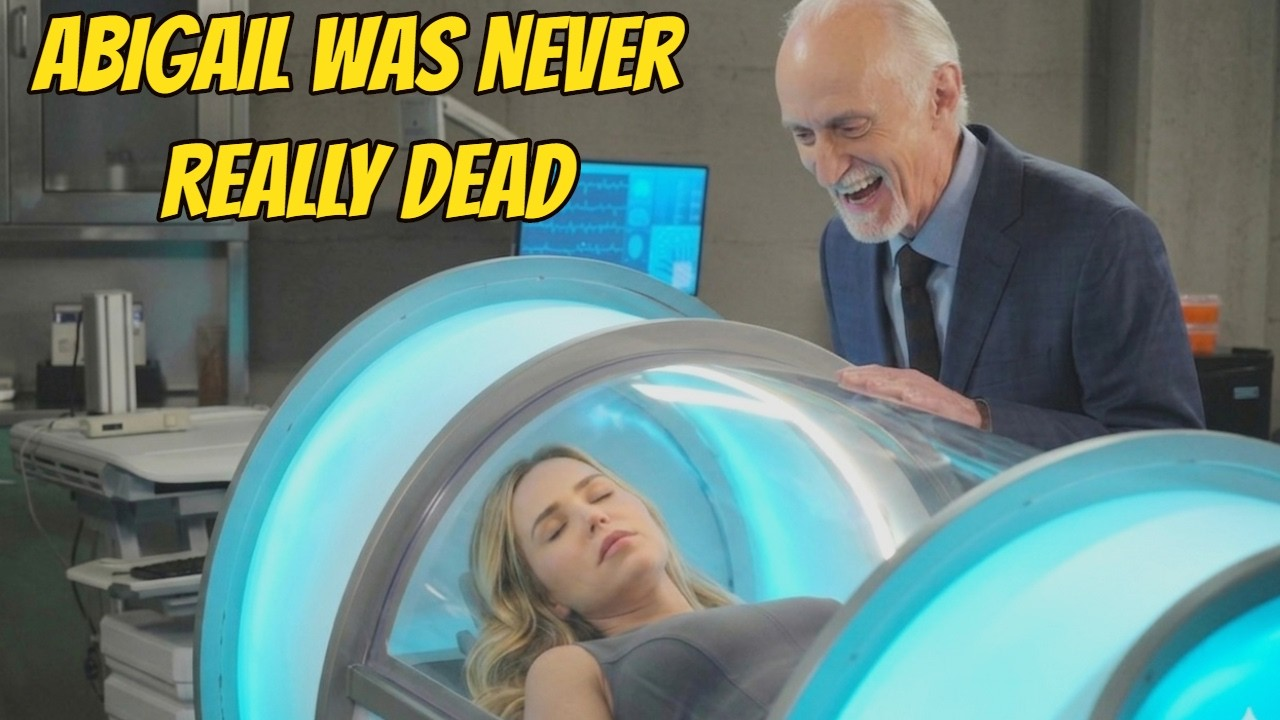
In the unmistakable tradition of Days of Our Lives, the sequence begins without unnecessary spectacle, yet every word seems loaded with significance. Rafe, whose investigative instincts rarely allow important details to escape his attention, introduces a subject capable of changing everything: Megan Hathaway’s disturbing resurrection experiments and the mysterious cocoons associated with them. These technologically advanced chambers have already demonstrated their terrifying ability to challenge the boundaries between life and death. Longtime viewers know that similar devices have previously played a role in bringing supposedly deceased individuals back into the world of the living. What initially sounded like an impossible scientific fantasy has gradually become an unsettling possibility within Salem’s reality.
The instant Rafe raises the subject of these strange preservation chambers, the entire conversation takes on a darker atmosphere. Cat responds in a way that suggests something far more serious than a passing reference. Her unsettling comments imply that another person connected to the complicated DiMera circle, someone everyone believes has already died, might soon make an unexpected appearance. Suspense builds with every passing moment until the conversation reaches its most significant revelation: the name Abigail is finally mentioned.
And that single name changes the meaning of everything.
It doesn’t emerge casually or without purpose. The deliberate delivery, combined with the tension surrounding the conversation, creates the unmistakable impression that viewers are being prepared for a major revelation. Abigail isn’t simply another deceased Salem resident whose name has resurfaced in conversation. Her journey may have been interrupted rather than concluded, and the writers appear to be laying the groundwork for an extraordinary continuation of her story.
What makes this possibility especially intriguing is a mystery that has troubled viewers for a considerable time: Abigail’s burial place was discovered to be empty. That unsettling detail has remained unresolved, hanging over the storyline like a question nobody has been able to answer. In daytime dramas, an unoccupied grave almost never exists without a reason. It usually represents an intentional clue, an unfinished mystery, or an early indication that a supposedly permanent farewell might eventually be reversed.
Reconsidering the circumstances surrounding Abigail’s apparent murder only makes the situation more suspicious. Clyde Weston’s dangerous schemes, along with the deception and confusion surrounding that period, created an atmosphere in which many crucial questions were never satisfactorily resolved. Her loved ones experienced tremendous suffering, and Salem mourned what appeared to be an irreversible tragedy. However, a convincing explanation for every suspicious detail never truly emerged. With the resurrection cocoons now becoming relevant again, those unresolved elements suddenly seem capable of forming a disturbing new picture.
What if Abigail was secretly removed from Salem and kept hidden throughout all this time? Could she have been placed inside one of those mysterious chambers, preserved in an unnatural condition between survival and death? And might Dr. Rolf, whose horrifying experiments have repeatedly crossed every ethical boundary, have been responsible for keeping her alive without anyone discovering the truth? Such a scenario sounds terrifying, but within the unpredictable universe of Days of Our Lives, it is hardly impossible.
However, discovering that Abigail survived would only introduce an even more troubling mystery.
What kind of woman would emerge from such an experience?
This is where the potential storyline becomes especially captivating. Abigail’s comeback might involve considerably more than simply returning home and resuming the existence that was stolen from her. If experimental procedures have kept her isolated for months, or possibly even years, the consequences could be profound. Nobody can confidently predict what those procedures might have done to her memories, emotions, or perception of reality. She might awaken with scattered recollections, unable to distinguish authentic experiences from confusion created during her captivity. Alternatively, the ordeal could have transformed her personality in ways that leave even those closest to her struggling to recognize the woman they once knew.
She could come back emotionally wounded, frightened, suspicious, or unexpectedly hardened by experiences she cannot fully explain. A woman who was once defined by warmth and compassion might now possess a more guarded and unsettling side. Her past would still be part of her identity, but everything that happened during her disappearance could influence how she approaches the world.
Such a development would create an opportunity to explore Abigail from an entirely different perspective. Rather than simply repeating familiar storylines, the writers could preserve the essential elements of her character while introducing complicated new conflicts, unexpected reactions, and emotional struggles unlike anything she has experienced before.
Meanwhile, growing speculation about a possible casting change has only intensified the excitement surrounding this mystery. Actress Sofia Mattsson has been mentioned as a potential performer who could assume the role of Abigail, although these claims remain speculative. If that possibility eventually becomes reality, it would represent a substantial creative decision. Replacing an actress associated with such a beloved character always involves uncertainty. Nevertheless, daytime television has repeatedly demonstrated that a carefully handled recast can give a familiar role fresh energy and allow an established personality to develop in surprising directions.
Should Mattsson ultimately portray Abigail, her arrival could signify something much more significant than a change of actress. She might be given the opportunity to introduce audiences to a fundamentally altered version of the character, one whose experiences have reshaped her understanding of herself and the people she loves.
This Abigail might not simply be returning from the dead. She could be beginning an entirely different chapter of her existence.
Naturally, the consequences of such a revelation would extend far beyond Abigail herself. Her unexpected reappearance would send emotional shock waves across Salem, affecting relationships, family loyalties, and long-standing conflicts that have evolved during her absence.
For Chad, the situation could become almost unbearable. He has spent an enormous amount of time grieving the woman he believed he had lost forever. Learning to live without Abigail has demanded tremendous emotional strength, especially while attempting to provide stability for their children. Although he has tried to move forward, the memories of their marriage and the love they shared have remained central to his life. If Abigail suddenly walks back into his world, every difficult adjustment he has made could be thrown into question.
Chad would have to confront feelings he thought he had already learned to manage. The possibility of being reunited with his wife might initially seem like the answer to every prayer, but the reality would almost certainly be more complicated. His life has continued, relationships have changed, and decisions have been made under the assumption that Abigail would never return.
Would he immediately embrace the chance to restore their marriage, or would the passage of time create painful obstacles that neither of them anticipated?
Their children, Thomas and Charlotte, would also experience an extraordinary emotional upheaval. For a child, discovering that a mother believed to be dead is suddenly alive should represent an unimaginable miracle. Yet such a revelation could also provoke overwhelming confusion. They have spent years adjusting to her absence, forming new routines, and learning how to understand a world in which their mother no longer seemed to exist.
Seeing Abigail again might awaken happiness, uncertainty, anxiety, and questions that no adult could easily answer. Their reunion would require patience, reassurance, and a gradual rebuilding of trust. The challenge might become even greater if Abigail returns with limited memories or difficulty connecting emotionally with the people she once knew so intimately.
The DiMera family would inevitably become involved as well. In that household, even seemingly joyful developments can quickly evolve into struggles over power, influence, and hidden agendas. Abigail’s return might be celebrated by some relatives while provoking suspicion or outright hostility among others. If her survival is connected to clandestine experiments, carefully concealed information, or individuals seeking control over the DiMera legacy, her presence could threaten secrets that powerful people would prefer to keep buried.
Some family members might genuinely want to protect her. Others could attempt to manipulate her fragile circumstances for their own advantage. And if Abigail possesses information acquired during her disappearance, she might unknowingly become a danger to people who have spent years protecting their darkest secrets.
Rafe’s involvement suggests that the story could develop into something far more complex than a family reunion. His experience as an investigator would make it impossible for him to overlook the potential criminal implications of the resurrection technology. If someone deliberately concealed Abigail, conducted unauthorized medical procedures, or used advanced scientific equipment to manipulate her condition, serious questions would have to be answered.
Who arranged her disappearance? Who financed the experiments? How many people knew she was alive? And what were they hoping to accomplish?
These questions could draw Rafe into a dangerous investigation involving individuals who have every reason to prevent the truth from reaching the public.
Cat Green’s role introduces another unpredictable dimension. Her association with the DiMera world places her in a position where personal loyalties, hidden motivations, and complicated relationships could intersect. She might ultimately become an important source of information, but her actions could also create uncertainty about whom she genuinely intends to help. Depending on what she knows and what she chooses to reveal, Cat could influence the investigation in ways that surprise both the other characters and the audience.
At the heart of this entire mystery remain those disturbing cocoons. More than simply unusual scientific equipment, they embody one of the defining qualities of Days of Our Lives: its willingness to combine extraordinary supernatural or science-fiction elements with deeply personal human drama. The chambers create the possibility of reversing death, but their dramatic importance extends beyond the immediate shock of someone unexpectedly returning.
They offer a way to investigate difficult questions about memory, identity, grief, and the emotional consequences of a life interrupted.
Because beneath every mysterious experiment and every sensational revelation lies a much more intimate question.
If Abigail comes back to Salem, will the people who love her recognize the person standing before them?
Returning from apparent death is rarely portrayed as a simple or painless experience in Salem. These extraordinary recoveries often introduce consequences that reach into every part of a character’s existence. Physical survival does not necessarily mean psychological recovery, and the restoration of life cannot automatically erase the suffering created by years of separation.
People who have spent a long time mourning someone may struggle when that person unexpectedly reappears. They must confront the difference between the memories they have preserved and the complicated reality of someone who may have undergone experiences they cannot comprehend.
In Abigail’s case, that emotional conflict could become the central force driving her story forward. She might have to rediscover the details of her own history, determine which memories are reliable, and gradually rebuild her understanding of the relationships that once defined her world. Every familiar face could bring comfort while simultaneously awakening painful uncertainty.
She may also be forced to decide how much of her former life she genuinely wishes to reclaim. The woman who emerges from captivity might still love her family, but that doesn’t necessarily mean she will be prepared to resume every responsibility and relationship exactly as they existed before.
The people around her would face challenges of their own. Chad could feel overwhelming gratitude mixed with hesitation. Thomas and Charlotte might experience joy alongside unfamiliar fears. Friends and relatives could struggle to understand the differences between the Abigail they remember and the individual who has returned.
Hope, suspicion, happiness, sorrow, and uncertainty might all exist together, making every reunion emotionally complicated.
For viewers, the potential storyline offers an enormous amount of material to examine and debate. A seemingly insignificant expression, an unusual reaction, or a carefully chosen sentence could become an important clue. Fans would undoubtedly analyze each new episode, searching for evidence about Abigail’s whereabouts, the circumstances surrounding her survival, and the identities of those responsible for keeping the truth concealed.
Every interaction between Rafe and Cat could take on added significance. Every reference to Dr. Rolf’s experiments might point toward another missing piece of the puzzle. Even seemingly ordinary moments involving Chad or the DiMera family could suddenly reveal unexpected connections.
The anticipation surrounding such a mystery could become just as captivating as the eventual revelation itself.
One thing seems increasingly apparent from the way these clues are being discussed: the possibility of Abigail returning provides the foundation for an exceptionally dramatic storyline. If the writers are intentionally building toward her comeback, they appear to be doing so through carefully placed hints rather than an immediate announcement. That kind of gradual development can prepare the audience for a revelation powerful enough to alter several connected stories at once.
A mystery of this scale would not merely affect a single episode. It could create repercussions that continue unfolding over many weeks, potentially changing the direction of several major relationships and conflicts.
The unanswered questions surrounding Abigail’s empty grave remain impossible to ignore. The renewed attention given to the resurrection chambers adds another suspicious element. And the fact that Abigail’s name has entered the conversation once again naturally encourages viewers to reconsider everything they thought they knew about her fate.
Taken together, these details create a compelling possibility: Abigail’s apparent death may not have represented the true conclusion of her story.
Instead, Salem could be approaching an emotionally charged revelation that reshapes not only Abigail’s future but also the lives of everyone connected to her.
The most fascinating question, therefore, may no longer be limited to whether Abigail survived. It concerns the circumstances of her possible return, the secrets surrounding her disappearance, and the identity of the woman who might ultimately step back into the lives of her family.
Would she still possess the tenderness, compassion, and devotion that Chad and their children remember so clearly? Could their love help her overcome the trauma of whatever happened during her absence? Or might she return as someone deeply changed, carrying frightening memories and dangerous secrets that threaten to destroy the fragile peace others have struggled to establish?
Perhaps the greatest shock would not be discovering that Abigail is alive.
Perhaps it would be realizing that the Abigail who returns is no longer the Abigail everyone expects.
As Salem moves closer to what could become another unforgettable turning point, its residents may soon be reminded of a lesson the town has learned countless times before: the past has a remarkable ability to return when nobody is prepared to face it.
Secrets buried for years can suddenly emerge, reopening wounds that once seemed healed. People who have been mourned can unexpectedly appear again, transforming grief into confusion and hope into uncertainty. And whenever the impossible becomes reality, the consequences are rarely predictable.
Prepare for a potentially extraordinary development, because if the clues surrounding the empty grave, the resurrection cocoons, and Abigail’s mysterious fate are connected in the way they appear to be, her journey may be nowhere near its conclusion.
In fact, the most dramatic chapter of Abigail Deveraux’s story could still be waiting to begin.